


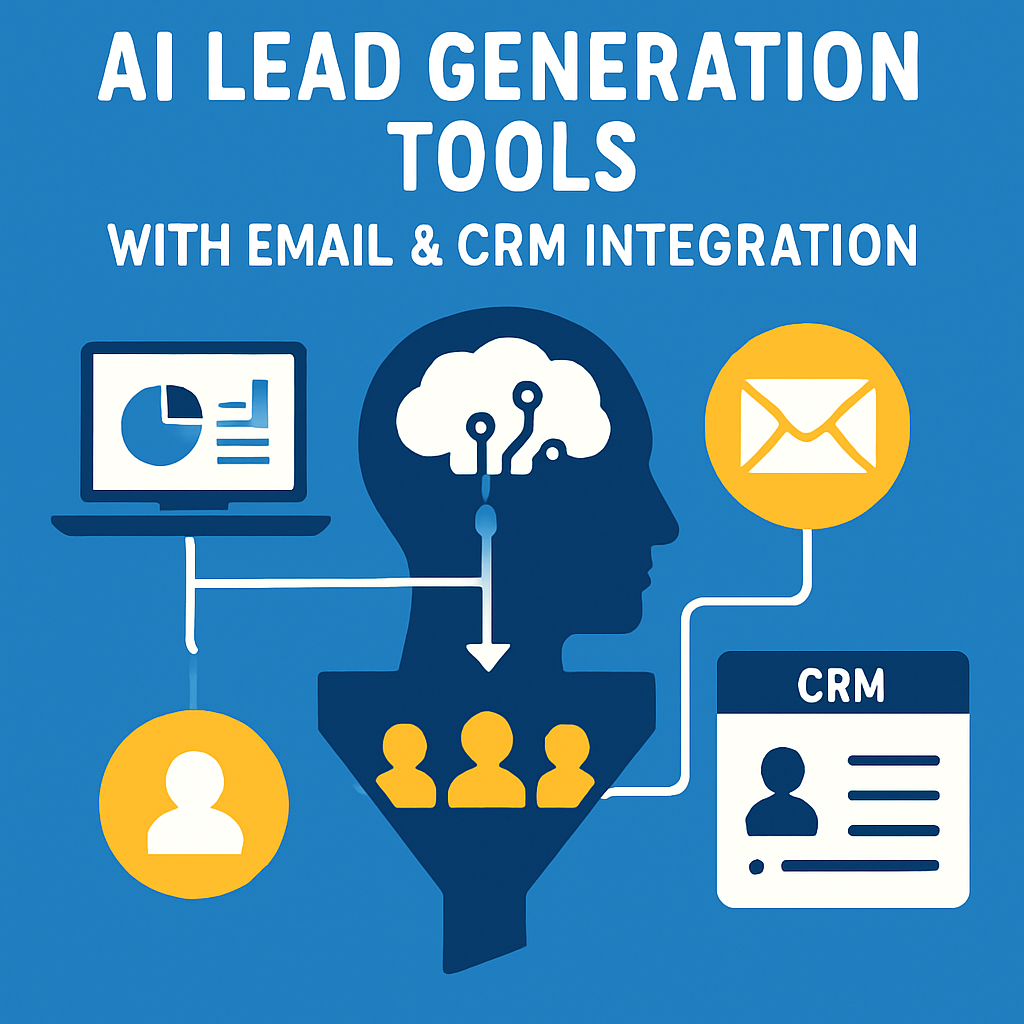
Quick answer: AI lead generation CRM tools such as HubSpot, Zoho CRM, and ActiveCampaign let small businesses automate prospect outreach, track replies, and move leads through a sales pipeline without manual data entry. These platforms combine email CRM integration with rule-based and AI-driven lead scoring so every follow-up happens on time. NineTen runs its own B2B outreach on the same systems it installs for clients, and in June 2026 alone our cold email engine sent more than 35,000 emails to over 15,000 distinct Malaysian businesses, with every reply triaged by AI first.
What is the difference between CRM lead automation and a standard CRM? A standard CRM stores contact records and deal stages manually entered by your team. CRM lead automation adds rule-based or AI-driven triggers that assign leads, send follow-up emails, and update pipeline stages without human input, reducing data entry and missed opportunities.
How does email CRM integration help a small sales team? Email CRM integration syncs every sent message, reply, and open event directly into the contact record, giving salespeople a full conversation history in one place and allowing the system to trigger automated follow-ups based on prospect behaviour.
“`html
The Complete Guide to AI Lead Generation Tools with Email & CRM Integration for Small Businesses
How to Supercharge CRM Lead Automation and Sales Pipeline Management with Intelligent Tech Solutions
In an era defined by rapid digital transformation and heightened competition, small business owners face unique challenges: keeping up with customer expectations, scaling sales efforts without ballooning headcount, and making sense of ever-growing data silos. If your sales team is overwhelmed by manual data entry, missing follow-ups, or struggling to prioritize leads, you’re not alone.
The powerful convergence of AI lead generation CRM, seamless email CRM integration, and advanced CRM lead automation promises to level the playing field. These technologies empower small businesses to compete with larger enterprises—automating lead nurturing, providing rich customer insights, and accelerating deals through AI sales pipelines.
This comprehensive how-to guide unpacks everything you need to know about implementing AI-driven lead generation tools with robust email and CRM integration. We’ll delve deep, offer practical steps, real-world case studies, and detailed explanations to empower you to revolutionize your sales workflow.
1. What is AI Lead Generation and Why Does It Matter?
The Fundamentals of AI Lead Generation
AI lead generation refers to the use of artificial intelligence and machine learning algorithms to find, qualify, and nurture potential customers—often automatically and at scale. The best AI lead generation CRMs don’t simply collect leads; they intelligently analyze buying signals, score leads based on conversion potential, prioritize for your sales reps, and foster engagement with the right prospect at the right time.
Core Capabilities of AI-Driven Lead Generation
- Automated Data Gathering: AI scans online databases, social channels, business directories, and your website for contact information and behavioral insights.
- Advanced Lead Scoring: Assigns a predictive score to each lead based on demographic fit, online behaviors, and interaction history.
- Personalized Engagement: Uses algorithms to send tailored emails and messages, optimizing tone and timing for each recipient.
- Seamless CRM Integration: Automatically syncs lead info and engagement data into your CRM, eliminating manual entry.
- Real-Time Analytics: Continuously learns which sources, messages, and sales reps yield the best results.
Why AI Lead Generation CRM Is a Game-Changer for Small Businesses
The reality is stark: 63% of marketers cite lead generation as their top challenge (HubSpot). For small businesses, limited manpower and time often mean missed opportunities.
Key Reasons AI Lead Generation Is Essential
- Competes with Larger Enterprises: With automation, SMBs can match or exceed the outreach velocity of bigger teams.
- Speed to Lead: Respond to new leads within minutes, not hours or days—enabling higher conversions (InsideSales.com).
- Improved Personalization: Tailor every marketing touchpoint to individual behaviors and preferences, increasing relevance and response.
- Cost-Effectiveness: Automate repetitive tasks and reduce the need for additional hires, optimizing resource allocation.
Example:
Imagine Maria, who runs a small e-commerce business. With customers visiting her website 24/7, she leveraged an AI-driven CRM tool to capture site visitors, score them based on browsing behavior, and trigger instant personalized emails about products they viewed but didn’t buy. The result? A 35% increase in email-to-sale conversions with minimal extra work for her small team.
2. How AI Lead Generation CRM Tools Work
A Deep Dive into Automated Lead Generation, Scoring, and Nurturing
An effective AI lead generation CRM automates the entire journey from visitor to customer—integrating seamlessly with your existing email and CRM systems.
a) Automated Lead Sourcing and Data Enrichment
How It Works:
- AI-powered searches scour thousands of online sources (social media, B2B platforms, industry lists) for new prospects that match your ideal customer profile.
- Data enrichment tools verify and complete missing information, such as filling in phone numbers, social profiles, and recent company news.
- Behavioral analytics track website pages visited, downloads, and engagement with previous campaigns—creating detailed customer profiles in your CRM.
Example:
Rohan, the owner of a B2B software firm, connected his AI CRM to LinkedIn and his website. The system automatically collected contact details of site visitors, enriched each profile with LinkedIn data, and added recent company updates before assigning them to his team for outreach.
b) Intelligent Lead Scoring
How It Works:
- AI analyzes dozens of data points (company size, job title, industry, engagement with your website and emails) to score leads automatically.
- The system learns over time, updating scores based on lead outcomes and continual data input (machine learning).
- Leads with the highest scores are funneled to the top of your sales pipeline, so sales reps focus their energy where it counts.
Practical Example:
After noticing that leads from construction firms were more likely to purchase, an AI CRM updated lead-scoring algorithms to assign higher value to similar profiles—ensuring sales teams focused on prospects most likely to convert.
c) Email CRM Integration
How It Works:
- Integrate with your email provider (Gmail, Outlook, etc.), syncing inbound and outbound communications with CRM contact records.
- Set up email workflows: e.g., automated welcome emails, nurture sequences, reminders, follow-ups, and win-back campaigns—triggered by specific lead actions.
- Two-way sync ensures that every interaction (email opens, replies, clicks) is logged, maintaining a 360° contact view.
Example:
A real estate agency uses its AI CRM to automatically send new property listings to buyers based on previous searches, with every interaction tracked in the CRM. When recipients click to view properties, they’re prioritized for quick follow-up by an agent.
d) CRM Lead Automation and AI Sales Pipeline
How It Works:
- Automation tools create tasks, log calls, schedule follow-ups, and assign leads to team members based on rules.
- Deal pipelines visualize every lead’s status—showing new, in progress, qualified, or closed—with drag-and-drop flexibility.
- AI-powered forecasting predicts revenue and spots bottlenecks, enabling better resource planning.
Scenario Example:
A landscaping company uses its AI CRM to automatically advance a lead in the pipeline once a proposal is sent, triggering reminders for follow-up calls and alerting management when high-value deals stall.
3. Key Benefits of CRM Lead Automation and Email CRM Integration
The Tangible Impact of Integrated Workflows and AI Automation
Unifying AI lead generation, CRM lead automation, and email CRM integration doesn’t just add features—it transforms your entire sales approach.
1. Respond to Leads Instantly
- AI automation ensures new inquiries get immediate, personalized follow-up, even outside business hours.
- Quick engagement increases the likelihood of starting a sales conversation—crucial since response time can be a major differentiator.
2. Increased Lead Quality and Conversion
- Automated lead scoring ensures only highly-qualified prospects reach your team.
- Integrated data from emails, calls, social, and web interactions creates fuller profiles—enabling more meaningful personalization.
3. Enhanced Sales Efficiency
- With automated workflows, your team spends less time on repetitive admin and more on selling.
- Task reminders and scheduled follow-ups prevent leads from falling through cracks.
4. Crystal Clear Pipeline Visibility
- Visual dashboards enable you to monitor every stage of your pipeline in real time.
- AI forecasts highlight potential revenue and surface risks before deals are lost.
5. Alignment Across Teams
- Marketing, sales, and customer service teams operate from a single source of truth, reducing miscommunication.
- Automated assignment and notifications ensure every lead is managed appropriately.
Case Example:
A small insurance agency implemented an AI CRM with automated email workflows. The result? Their agents responded to web leads in under five minutes, saw a 70% boost in meeting bookings, and used AI recommendations to cross-sell additional policies more effectively.
4. Must-Have Features When Selecting an AI Lead Generation CRM
Essential Capabilities for Seamless AI Sales Pipeline Management
Finding the right AI lead generation CRM for your small business hinges on identifying key features that match your workflow and growth plans.
Core Non-Negotiable Features
- AI-Powered Lead Scoring: Dynamic scoring based on historical outcomes, demographic fit, and real-time engagement.
- Integrated Email Campaigns: Design, automate, and track multi-step emails with robust template libraries.
- End-to-End CRM Lead Automation: Automatically trigger tasks, schedule meetings, and move deals through your customizable pipeline.
- User-Friendly Interface: Quick implementation and intuitive dashboards; minimal setup required.
- Comprehensive Email CRM Integration: Bi-directional email sync ensures all conversations are tracked.
- Data Security & Compliance: GDPR, CCPA, and industry-standard security certifications to protect client data.
- Customization: Adapt fields, scoring models, pipeline stages, and email sequences to your unique process.
Nice-to-Have Advanced Features
- Mobile App Access: Manage your pipeline and receive notifications on the go.
- Automated Dialers/Call Logging: Seamless integration with telephony for click-to-call and auto-logging conversations.
- Analytics and Reporting: Real-time dashboards, custom reports, and conversion tracking.
- Marketing Automation: Automated drip campaigns, lead nurturing journeys, and web chatbots.
- Third-Party Integrations: Connect with popular tools (like Slack, Zapier, QuickBooks, Calendly, Zoom).
- AI-Powered Recommendations: Smart suggestions for next best actions, optimal send times, and content personalization.
Action Step:
List your top three sales process pain points (e.g., slow follow-ups, manual data entry, lack of visibility). Use this as your decision benchmark. Trial two to three platforms—such as HubSpot CRM (with AI tools), Pipedrive (with Smart Docs), Apollo.io, or Zoho CRM—to compare suitability and user experience before making a commitment.
5. Case Studies: Small Businesses Thriving with AI
Bringing theory to life, here’s how real small businesses use AI lead generation CRM tools to streamline their operations and drive tangible results.
Case Study 1: Doubling Conversions in a Consulting Firm
The Problem:
Skyline Consulting, a five-person HR firm, was overwhelmed by manually qualifying and following up with inbound leads from networking events and website forms. Delayed responses led to missed opportunities and lower close rates.
AI CRM Solution:
After implementing an AI-powered CRM with lead scoring and integrated email workflows, they:
- Automated welcome emails, qualification surveys, and reminders for consultants.
- Used AI to rank leads based on company size and engagement, pushing “hot” leads to the top of the pipeline.
- Deployed follow-up email sequences that adjusted based on lead engagement.
Results:
- Time to first contact dropped from 24 hours to less than five minutes.
- Conversion rate for qualified leads doubled within four months.
- Admin workload reduced by 40%, freeing consultants to focus on higher-value client work.
Case Study 2: Streamlining Multi-Channel Lead Capture in SaaS
The Problem:
LaunchLab, a SaaS startup, captured leads from paid ads, webinars, and partnerships but struggled to unify data across systems. Leads were often lost as handoffs from marketing to sales faltered.
AI CRM Solution:
- Centralized all lead sources via CRM integrations (website forms, Facebook Ads, LinkedIn).
- Automatic enrichment added company details and social links to each lead.
- AI-driven lead scoring funneled the most promising opportunities to sales, notifying reps immediately.
- Automated emails nurtured colder leads until they became sales-ready.
Results:
- Lead response time improved from 12 hours to under five minutes.
- Pipeline bottlenecks were eliminated, resulting in a 60% increase in demos booked.
- $180,000 in previously lost deals were “rescued” in six months thanks to persistent, automated follow-up.
Case Study 3: Winning Back Lost Clients in a Local Service Business
The Problem:
Amanda ran a boutique home cleaning service and noticed a pattern: former clients would drop off without warning, and her team was too busy to re-engage them. Traditional email blasts yielded few results.
AI CRM Solution:
- AI segmented the contact database based on service history and past engagement.
- Automated, personalized win-back emails scheduled at optimal times for each recipient.
- CRM tracked every response, automatically creating tasks for Amanda’s team when clients replied or clicked for a quote.
Results:
- 28% of lapsed clients booked recurring service within three months.
- Personalized campaigns outperformed generic email blasts by 3x in open and response rates.
- Amanda spent less than 30 minutes per week managing campaigns.
6. Step-by-Step Implementation Guide: AI Lead Generation for Small Businesses
Transitioning to AI-driven lead generation is achievable with a methodical approach. Here’s a stepwise action plan tailored for small business owners.
Step 1: Define Your Ideal
Frequently asked questions
What is AI lead scoring and how does it help a small business prioritise follow-ups?
AI lead scoring analyses prospect behaviour such as email opens, link clicks, and website visits to rank leads by their likelihood to buy. This lets a small sales team focus time on the warmest prospects first rather than treating every contact equally, reducing wasted effort and improving conversion rates.
Can a CRM with email integration work for a B2B business selling to other Malaysian companies?
Yes. A CRM with email integration tracks every touchpoint with a business contact, logs replies automatically, and can trigger follow-up sequences based on response behaviour. NineTen uses this approach in its own B2B outreach, having sent more than 35,000 cold emails to over 15,000 distinct Malaysian businesses in June 2026 alone, with every reply triaged by AI before a human steps in.
How is sales pipeline automation different from simply scheduling emails in advance?
Scheduled emails send at a fixed time regardless of what the prospect does. Sales pipeline automation responds to real behaviour, moving a lead to the next stage, assigning a task to a salesperson, or pausing outreach if a reply is detected, so the process adapts to each prospect rather than running on a fixed clock.
Which types of businesses benefit most from combining CRM automation with email outreach?
Businesses with longer sales cycles, multiple decision makers, or a high volume of inbound enquiries tend to gain the most. Service firms, agencies, and B2B suppliers find automation especially useful because it maintains consistent follow-up across many prospects without requiring a large sales headcount.
Frequently asked questions
What is AI lead scoring and how does it help a small business prioritise follow-ups?
AI lead scoring analyses prospect behaviour such as email opens, link clicks, and website visits to rank leads by their likelihood to buy. This lets a small sales team focus time on the warmest prospects first rather than treating every contact equally, reducing wasted effort and improving conversion rates.
Can a CRM with email integration work for a B2B business selling to other Malaysian companies?
Yes. A CRM with email integration tracks every touchpoint with a business contact, logs replies automatically, and can trigger follow-up sequences based on response behaviour. NineTen uses this approach in its own B2B outreach, having sent more than 35,000 cold emails to over 15,000 distinct Malaysian businesses in June 2026 alone, with every reply triaged by AI before a human steps in.
How is sales pipeline automation different from simply scheduling emails in advance?
Scheduled emails send at a fixed time regardless of what the prospect does. Sales pipeline automation responds to real behaviour, moving a lead to the next stage, assigning a task to a salesperson, or pausing outreach if a reply is detected, so the process adapts to each prospect rather than running on a fixed clock.
Which types of businesses benefit most from combining CRM automation with email outreach?
Businesses with longer sales cycles, multiple decision makers, or a high volume of inbound enquiries tend to gain the most. Service firms, agencies, and B2B suppliers find automation especially useful because it maintains consistent follow-up across many prospects without requiring a large sales headcount.
Get customers on autopilot. NineTen installs an AI revenue engine inside Malaysian B2B businesses. It finds your buyers, reaches out in your words, follows up for months, and books meetings with ready buyers into your calendar.
Chat with us on WhatsApp and see what it could do for your business.
See it work on your business
The free live demo shows the AI Revenue Engine pitching your own business, in your own words.