


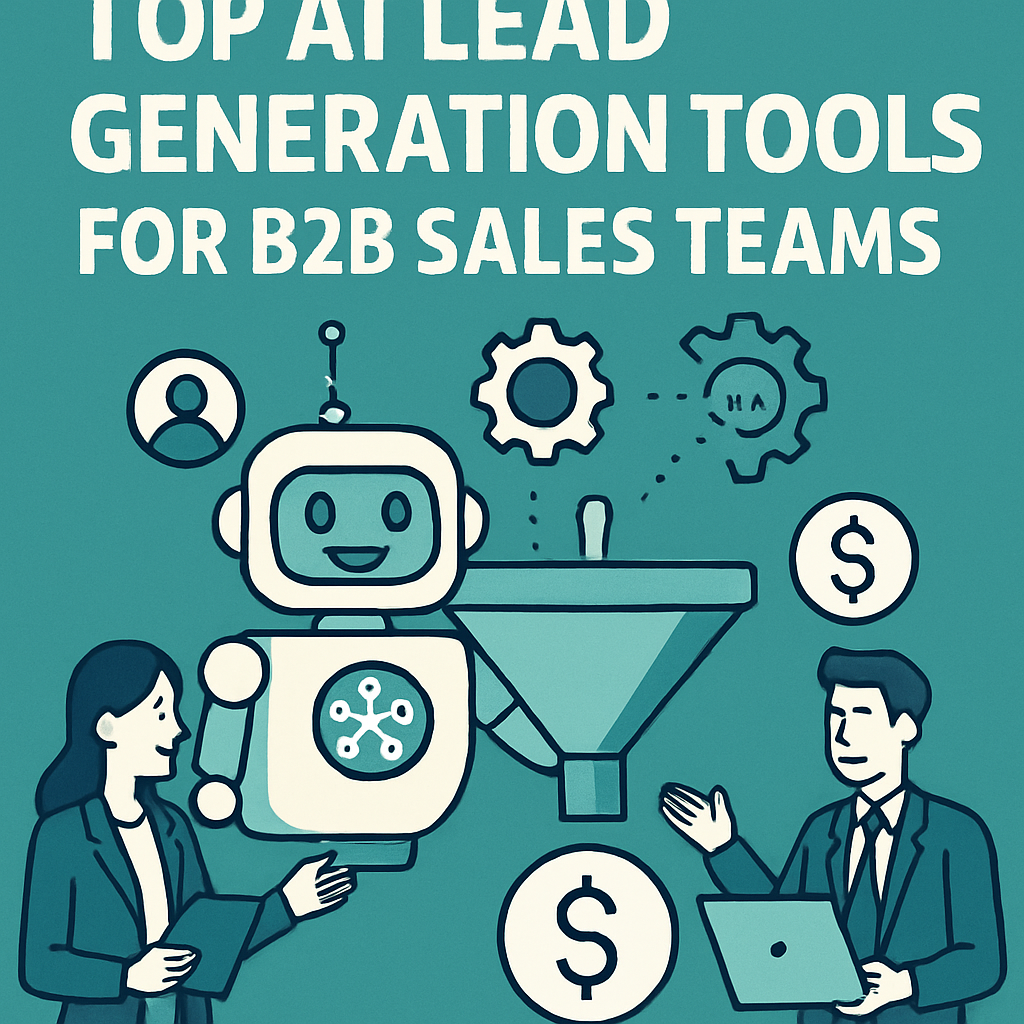
Quick answer: The strongest AI lead generation tools for B2B sales teams in 2025 include Apollo.io, LinkedIn Sales Navigator, ZoomInfo, Cognism, Lusha, and Salesloft, each suited to different prospecting needs and team sizes. The right choice depends on your data requirements, outreach volume, and how much automation you want baked in. NineTen runs its own cold email engine on the same AI systems it builds for clients, sending over 35,000 cold emails to more than 15,000 distinct Malaysian businesses in a single month, with every reply triaged by AI first.
What is the difference between a B2B prospecting tool and an AI sales automation platform? A B2B prospecting tool focuses on finding and qualifying leads, typically through database search and contact enrichment. An AI sales automation platform goes further, handling outreach sequencing, follow-ups, and reply triage automatically, so your team spends time only on warm conversations rather than manual groundwork.
How do AI lead generation tools improve reply rates for B2B outreach? AI tools improve reply rates mainly by increasing sending frequency to well-validated contacts, personalising messaging at scale, and timing outreach based on engagement signals. Research across B2B campaigns consistently shows that consistent volume to a verified, relevant audience matters more than personalisation alone.
“`html
Top AI Lead Generation Tools for B2B Sales Teams: A Comprehensive Comparison
In a high-stakes, relationship-driven B2B environment, sales teams must stay ahead of the curve to unearth, nurture, and close quality leads before competitors do. The digital transformation of buying journeys, paired with ever-mounting demands for personalization and speed, has made traditional prospecting tools and manual research increasingly insufficient. The answer? AI lead generation tools for B2B—intelligent platforms engineered to supercharge sales pipelines, automate tedious workflows, and empower business development teams to connect with the right decision-makers at the right time.
This in-depth guide provides a comprehensive overview and unbiased comparison of the leading AI-powered platforms for B2B lead generation. With detailed explanations, practical examples, and industry case studies, you’ll gain clarity on which solutions fit your sales goals, the realities of AI sales automation, and how best to harness enterprise lead tools for sustained growth.
Table of Contents
- Why AI Is Revolutionizing B2B Lead Generation
- Key Features of Advanced AI Lead Generation Tools
- Comprehensive Comparison: Top AI Lead Generation Tools for B2B Sales
- Apollo.io
- LinkedIn Sales Navigator
- ZoomInfo
- Cognism
- Lusha
- Salesloft
- Striking the Right Balance: B2B Prospecting Tools vs. AI Sales Automation
- Success Stories & Illustrative Case Studies
- How to Seamlessly Integrate AI Lead Tools Into Your Sales Workflow
- Frequently Asked Questions
- Conclusion: Selecting the Optimal AI Lead Generation Platform
1. Why AI Is Revolutionizing B2B Lead Generation
AI is fundamentally transforming the B2B sales landscape, replacing guesswork with data-driven precision and enabling teams to scale revenue-generating activities without sacrificing the human touch. Here’s why this shift matters:
1.1. The Changing Face of B2B Sales
Modern B2B buyers are more self-sufficient than ever. Before initiating contact with sales, prospects often:
- Conduct independent, multi-source research,
- Compare solutions using online reviews and peer recommendations,
- Set clear expectations for personalized, consultative interactions.
This fragmented, digital-first journey requires sales teams to identify, engage, and nurture leads proactively—often before buyers formally declare intent. Manual prospecting is too slow and error-prone to keep up. Here’s where AI lead generation tools for B2B shine, leveraging automation and intelligence to:
- Uncover hidden, ready-to-buy prospects,
- Personalize outreach at scale,
- Prioritize leads based on real-time buyer intent.
1.2. Market Impact and Productivity Gains
- 43% of B2B organizations incorporated AI into lead generation by 2023 (Gartner, 2023).
- AI-driven prospecting boosts sales productivity by up to 50% (McKinsey & Company, 2023).
- 77% higher conversion rates are achieved by B2B teams deploying AI-based lead scoring compared to legacy methods (Aberdeen Group, 2023).
1.3. Real-World Transformation Example
A North American SaaS provider previously tasked business development reps with hours of LinkedIn research weekly. By adopting AI-powered segmentation and email automation, they shifted reps’ time from manual lead qualification to high-value video demos and negotiations. The outcome: a 40% surge in monthly SQLs and a measurable reduction in overall sales cycle length.
2. Key Features of Advanced AI Lead Generation Tools
Leading AI lead generation tools for B2B are distinguished by their combination of large data sets, intelligent algorithms, automation functionalities, and easy integrations with existing enterprise lead tools.
2.1. Feature Checklist for Modern B2B Teams
- Automated Data Enrichment
Harvests and syncs up-to-date company, contact, and behavioral data from trusted global sources and digital footprints, including social media signals, recent funding news, and company tech stacks. - Predictive Lead Scoring
Ranks new and existing prospects based on a blend of demographic/firmographic fit, behavioral intent, and historical engagement patterns—allowing sales teams to focus on those most likely to convert. - AI-Powered Personalization
Automatically generates hyper-personalized emails, LinkedIn messages, and call scripts by analyzing each prospect’s unique attributes, pain points, and industry trends. - Real-Time Alerts and Buyer Intent Signals
Notifies sales reps instantly when targeted accounts exhibit buying signals (e.g., website visits, event attendance, competitor technology adoption). - Seamless Integrations
Connects bidirectionally with your CRM, marketing automation platforms, and communication tools—ensuring clean data and smooth sales ops. - Compliance Safeguards
Includes in-built GDPR/CCPA compliance checks, consent management, and opt-out controls, crucial for global organizations.
2.2. Enhanced Value Delivered
- Faster Lead Qualification: AI rapidly filters through massive lead lists, surfacing only those who meet your ICP and display buying intent.
- Increased Rep Productivity: Automation frees up reps to focus more on building relationships, demos, and closing—not tedious data entry or cold research.
- Higher Personalization at Scale: Custom AI models generate unique outreach for every high-value prospect—something virtually impossible with manual methods.
3. Comprehensive Comparison: Top AI Lead Generation Tools for B2B Sales
In a market crowded with feature-rich platforms, selecting the right AI lead generation tool for B2B teams depends on nuanced factors: coverage, data quality, automation, compliance, price, and fit with your team’s workflow. Here’s a side-by-side look at today’s top solutions, enriched with detailed practical examples.
3.1. Apollo.io
Overview
Apollo.io stands out for its blend of expansive global contact data, AI-driven prospect recommendations, and deeply configurable sales workflows. It’s ideal for teams who want a unified prospecting, outreach, and analytics suite—without overpaying.
Key Features
- 275M+ verified contacts with advanced filtering
- AI-driven “Smart Lists” and automated prospect recommendations
- Customizable, automated email sequences paired with call and LinkedIn task integration
- Intuitive reporting dashboards (open rates, conversions, pipeline health)
- Chrome extension for one-click prospecting from LinkedIn, company websites, or inbox
Real-World Example
A FinTech scale-up rolled out Apollo.io across its SDR team. By leveraging AI-powered fit and intent scoring, they doubled qualified meetings per month and reduced manual lead research time by 60%. Sales directors also praised Apollo’s ability to auto-generate targeted multi-channel cadences, improving reply rates and transparency across the pipeline.
Distinguishing Strengths
- Flexible enough for startups; robust enough for enterprise
- Predictive lead scoring means reps always know who to call next
- Integrates seamlessly with CRMs like Salesforce and HubSpot
3.2. LinkedIn Sales Navigator
Overview
Built atop the world’s largest professional network, LinkedIn Sales Navigator is the gold standard for social selling and relationship-driven sales. Its AI capabilities equip B2B teams to prospect intelligently and spot buying triggers before competitors.
Key Features
- Proprietary “Lead Recommendations” based on network signals and shared interests
- Live company and individual alerts (promotions, job changes, funding news)
- High-conversion InMail outreach with automation tools
- “Smart Links” for sharing tailored content and tracking engagement
- Deep CRM integrations—automatically logs activities and syncs new leads
Illustrative Case
An enterprise HR consulting firm targeting mid-market US companies used Sales Navigator’s AI filters to find HR decision-makers based on recent company expansion announcements. By prioritizing “active” prospects (e.g., those engaging with similar vendors), they improved demo booking rates from 7% to 17% and shortened sales cycles by two weeks.
Standout Value
- Unparalleled real-time data accuracy
- Social listening means you spot intent signals first
- Particularly effective for ABM (Account-Based Marketing) approaches
3.3. ZoomInfo
Overview
ZoomInfo is lauded for its powerful, AI-enriched global database, multi-layered intent data, and tight integrations with enterprise lead tools for automation and reporting. It’s a top choice for large or data-forward B2B organizations.
Key Features
- Deep, research-driven company and contact records (hierarchies, buying committee mapping)
- “Intent Signals” to identify prospects researching solutions like yours
- Predictive ML scoring to focus teams on the most winnable opportunities
- Automated data enrichment and CRM deduplication
- Advanced segmentation and multi-channel workflow triggers
Case Study
A cybersecurity vendor expanding in EMEA used ZoomInfo to create intent-driven outreach lists, identifying companies actively searching for compliance solutions. They saw a 3X increase in sales-qualified leads and attributed over half of new opportunity conversion to ZoomInfo’s pipeline insights and auto-updating contact info.
Key Strengths
- Comprehensive, industry-leading B2B data sets
- Ideal for large sales teams focused on pipeline velocity and reduced wasted effort
- Excellent D&B, Salesforce, and marketing platform syncs
3.4. Cognism
Overview
Cognism has carved a niche among international and compliance-sensitive B2B organizations. Its AI-enhanced, GDPR-compliant prospecting platform makes it ideal for EMEA, APAC, and global SaaS or financial services sales.
Key Features
- AI-powered “Diamond Data” emphasizes recency and cross-platform validation
- Full GDPR/CCPA compliance and consent workflows
- Intent signal-based prospecting (e.g., based on specific tech adoption or hiring trends)
- Real-time enrichment and accurate mobile contact info
- Multi-language data and outreach support
Customer Example
A fast-growing health tech company in the EU needed to ensure outreach complied with GDPR while expanding into the DACH region. Cognism’s AI tools identified the best-fit healthcare IT decision-makers and automatically validated mobile numbers and emails. Conversion rates on cold emails jumped from 5% to 12%, and the risk of compliance breaches was minimized.
What Sets Cognism Apart
- Purpose-built for international, multi-market prospection
- White-glove compliance tools and human-in-the-loop verification
- Integrates with Salesforce, Outreach, HubSpot
3.5. Lusha
Overview
Focused on streamlined sales research, Lusha offers fast, embeddable enrichment tools and accurate contact discovery for LinkedIn and CRM. With affordable team plans, it’s popular among both startups and established mid-sized companies.
Key Features
- Chrome extension for instant prospect data on LinkedIn, Gmail, Salesforce
- AI-powered “Lead Recommendation Engine” built on search and engagement history
- One-click team sharing and pipeline integration
- Focuses on accuracy for phone, email, and company size/title info
Real-World Use
A US-based SaaS provider’s SDR team adopted Lusha to eliminate “dead-end” email bounce backs. Access to accurate direct dials increased their call connection rates by 25%, while Lusha’s AI suggestions surfaced contacts likely to be switching jobs or companies, improving timing on outreach.
Key Strengths
- Extremely lightweight, easy to deploy and train
- High ROI for resource-constrained teams
- Complements more powerful AI sales automation tools
3.6. Salesloft
Overview
More than just a cadence tool, Salesloft has evolved into a fully-fledged AI sales engagement platform that automates communication, prioritizes tasks, and analyzes results to recommend next steps.
Key Features
- Dynamic, AI-powered sales cadences and personalized messaging
- “Conversation Intelligence” for call/sentiment analysis and coaching
- ML-based lead/touchpoint prioritization so reps always know their most promising next action
- In-depth analytics for pipeline health, team performance, and buyer engagement
Case Example
A global logistics company equipped its SDRs and AEs with Salesloft. By automating cadence optimization (days/times, content types) and using AI-driven prioritization (“next-best-lead” suggestions), they increased meetings set by 35% and improved new-hire ramp by 40%. Conversation insights flagged common objections, helping managers run more effective coaching sessions.
Differentiators
- End-to-end visibility and enablement for mid-market/enterprise teams
- AI “next best action” means less time spent figuring out what to do next
- Integrates deeply with Salesforce, Microsoft Dynamics, and Marketo
4. Striking the Right Balance: B2B Prospecting Tools vs. AI Sales Automation
With so many powerful tools on the market, how should organizations combine traditional B2B prospecting platforms and the latest AI-driven sales automation features? Understanding their relative strengths is key to building an effective sales stack.
4.1. Traditional B2B Prospecting Tools
These foundational platforms (like Hunter.io, InsideView, or classic database providers) provide:
- Core company and contact data
- Basic filtering (location, industry, size)
- Simple emailing or list-building capabilities
While reliable, these tools typically lack real-time insights, automated personalization, AI lead scoring, and advanced integrations—making them less effective for modern ABM or intent-driven outreach.
4.2. AI Sales Automation
AI-powered platforms (ex: Apollo.io, ZoomInfo, Cognism) dramatically elevate your workflow by adding:
- Dynamic intent/engagement scoring
- Automated, hyper-personalized multi-step outreach (email, social, call)
- Real-time alerts about prospect activity (website visits, news, competitor tech installs)
- Machine learning-driven cadences: AI suggests who to contact, when, with what message
- Automated compliance and privacy workflows
Frequently asked questions
What should a Malaysian SME look for when choosing a B2B lead generation tool?
Look for a tool that covers your target market's data well, integrates with your existing CRM or email platform, and offers enough automation to reduce manual follow-up. For Malaysian SMEs, verifying that the contact database includes local business data is especially worth checking before committing to any subscription.
How many cold emails does a B2B outreach campaign typically need to send before results show?
Volume and consistency matter more than any single send. NineTen's own cold email engine sent over 35,000 emails to more than 15,000 distinct Malaysian businesses in a single month, and replies are triaged by AI before a human gets involved, which keeps the pipeline moving without burning out the sales team.
Can AI tools handle B2B follow-ups automatically, or does a human still need to manage replies?
Modern AI sales tools can triage replies, qualify intent, and continue conversations on channels like WhatsApp before a human steps in. At NineTen, when a prospect replies to a campaign or shares their number, the AI follows up on WhatsApp, qualifies the lead, and proposes meeting slots, with a human taking over only for the meeting itself.
Is a high contact database volume or message personalisation more important for B2B outreach?
Research across B2B campaigns consistently shows that consistent volume sent to a verified, relevant audience tends to drive more replies than personalisation alone. A combination of clean data, validated contacts, and timely follow-up generally outperforms highly crafted messages sent to a small or poorly targeted list.
Tools still need your people, so if you would rather hire a team, judge a B2B lead generation agency in Malaysia first.
Get customers on autopilot. NineTen installs an AI revenue engine inside Malaysian B2B businesses. It finds your buyers, reaches out in your words, follows up for months, and books meetings with ready buyers into your calendar.
Chat with us on WhatsApp and see what it could do for your business.
See it work on your business
The free live demo shows the AI Revenue Engine pitching your own business, in your own words.