


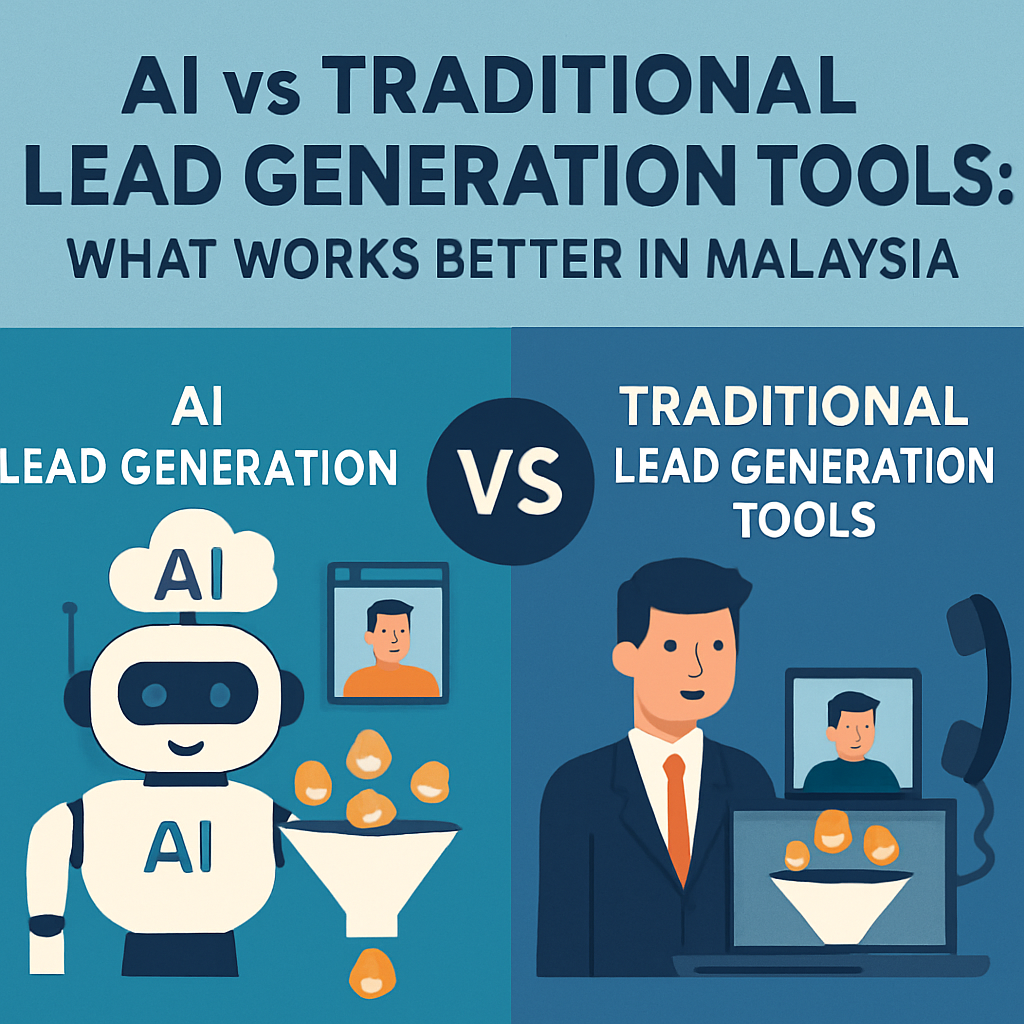
Quick answer: For most Malaysian B2B businesses, AI lead generation outperforms traditional manual methods on speed, scale, and consistency. AI handles high-volume outreach and instant follow-up that manual teams cannot sustain. NineTen.ai provides done-for-you AI lead generation for Malaysian B2B companies, running the same systems for its own outreach: in June 2026, the cold email engine sent over 35,000 emails to more than 15,000 distinct Malaysian businesses, with every reply triaged by AI first.
What are the main weaknesses of traditional lead generation in Malaysia? Traditional methods such as cold calling and manual prospecting are slow to scale and depend heavily on individual staff performance, making results inconsistent and return on investment difficult to measure.
Can AI and traditional lead generation be used together in Malaysia? Yes. Many Malaysian businesses combine AI tools for high-volume outreach and triage with human follow-up for qualified conversations, which tends to produce better results than relying on either approach alone.
“`html
AI vs Traditional Lead Generation Tools: What Works Better in Malaysia?
In Malaysia’s rapidly evolving B2B landscape, the battle between emerging technologies and time-tested methods is at the forefront of every corporate sales discussion. As digital transformation drives change across Southeast Asia, businesses are under increasing pressure to generate and convert high-quality leads faster and more efficiently. From Kuala Lumpur’s bustling tech start-ups to Penang’s manufacturing powerhouses, the question arises: AI vs traditional lead generation—what truly works better in Malaysia?
This in-depth comparison explores both manual lead generation and AI sales tools, offering real-world Malaysian case studies, comprehensive lead generation comparison tables, actionable steps, and deep dives into the strengths and pitfalls of each method. By the end, corporate professionals will be equipped to make informed decisions that fit their unique business goals.
Table of Contents
- Introduction: The State of Lead Generation in Malaysia
- Understanding Traditional Lead Generation Tools
- Manual Lead Generation Methods
- Advantages and Limitations
- Real-World Examples
- The Rise of AI Sales Tools
- Key Features of AI-Powered Solutions
- How AI Adapts to Malaysian Markets
- Local Success Stories
- Lead Generation Comparison: AI vs Traditional Methods
- Metrics and Performance Analysis
- Strengths and Weaknesses
- In-Depth Malaysian Case Studies
- Financial Services
- Manufacturing and Export
- Technology Startups
- Transitioning from Manual to AI-Driven Lead Generation
- Step-by-Step Implementation Guide
- Practical Tips for a Hybrid Approach
- Mistakes to Avoid
- Overcoming Common Challenges
- Data Compliance
- Human-AI Collaboration
- Continuous Optimization
- FAQs for Corporates in Malaysia
- Conclusion: The Optimal Lead Generation Strategy for Malaysian Businesses
1. Introduction: The State of Lead Generation in Malaysia
The Malaysian economy is gearing up for a digital leap, with the digital sector expected to contribute over 22% to GDP by 2025 (World Bank, 2022). In this context, capturing qualified leads isn’t just a matter of sales growth—it’s a survival imperative for corporates ranging from SMEs to multinational conglomerates.
Malaysia presents unique challenges and opportunities for lead generation:
- Intensively competitive landscape: Over 98% of registered businesses are SMEs, creating fierce competition in almost every vertical.
- Diverse demographics: Outreach must account for four major languages and varied cultural norms.
- Digital divides: While fintech, e-commerce, and technology leap ahead, other sectors still rely heavily on manual processes.
- Regulatory landscape: The Personal Data Protection Act (PDPA) and evolving privacy expectations make data handling more complex.
In the face of these factors, optimizing lead generation—whether manual or AI-driven—is more urgent than ever.
2. Understanding Traditional Lead Generation Tools
Manual Lead Generation Methods
Manual lead generation relies on human efforts for each stage of the process—research, outreach, qualification, and nurturing. Common traditional tools include:
- Cold calling and emailing: Reaching out to prospects sourced from business directories, company websites, or referrals.
- Face-to-face networking: Attendance at trade exhibitions, industry seminars, chamber of commerce meetings, and other networking events—a staple for relationship-driven sectors.
- Printed marketing collateral: Distribution of brochures, flyers, and even coupons at business premises, expos, or conferences.
- Purchased lists and databases: Subscription to local and international company directories, sometimes purchased from third parties, to build prospect lists.
- Content marketing: Early-stage inbound tactics like non-personalised blogs or static whitepapers—without the benefit of AI-driven optimization or audience targeting.
Detailed Workflow:
A typical manual process for a B2B sales executive in Malaysia might look like:
- Spend hours or days compiling customer lists from the Malaysian Investment Development Authority (MIDA) website or local directories.
- Research each company’s profile to identify key contacts across multiple sources (often hindered by outdated or incomplete data).
- Craft and send personalised emails, followed by phone calls if initial contact fails.
- Attend industry events and collect business cards, later entering contacts into spreadsheets for follow-up.
- Manually update lead statuses, sometimes across fragmented Excel files or non-integrated CRMs.
Advantages and Limitations
Advantages:
- Personal Touch: In Malaysia’s business culture, personal relationships and trust are paramount, especially in industries like wholesale, real estate, financial services, and B2B supply chains.
- Cultural Sensitivity: Experienced salespeople can intuit nuanced cultural or language preferences—essential for closing deals across Malaysia’s multi-ethnic business environment.
- Custom Qualification: Sales reps can immediately sense red flags or promising signals when engaging leads, allowing more nuanced qualification for niche markets.
Limitations:
- Scalability Issues: Human effort doesn’t scale—doubling leads means doubling staff or working hours.
- Labor Intensiveness: Manual research, outreach, and follow-ups are demanding and repetitive, leading to burnout or errors.
- Data Integrity Risk: Outdated contact information, duplicate entries, and fragmented records are common.
- Slow Time-to-Lead: Building a list and reaching out can take weeks, slowing pipeline growth.
- Lower Conversion: According to McKinsey (2023), B2B sales teams relying solely on manual methods see global average conversion rates as low as 1.3%.
Real-World Examples
Example 1: SME in Business Services
A consulting firm in Johor Bahru allocated three team members solely to extract leads from online directories and government registries. Of 500 companies contacted over a month, less than 3% responded due to wrong numbers, outdated emails, and generic outreach.
Example 2: Construction Industry Networking
An established construction supplier in Klang Valley used trade fairs as the main source of new business. While high-value deals sometimes resulted, the lead volume was unpredictable, with follow-up often hindered by misfiled business cards and forgotten conversations.
3. The Rise of AI Sales Tools
Key Features of AI-Powered Solutions
AI sales tools leverage structured and unstructured data to automate, accelerate, and optimize every aspect of lead generation, scoring, and engagement. Key features include:
- Automated data scraping and enrichment: Real-time extraction and validation of contact information from credible online sources such as LinkedIn, domain registries, and company websites.
- Predictive lead scoring: Machine learning algorithms analyze historical conversion data, website behavior, and engagement signals to rank leads by conversion likelihood.
- Personalized, automated outreach: AI tools craft hyper-personalized email or WhatsApp campaigns, customizing subject lines, content, and follow-ups for each lead segment.
- AI Chatbots: Multi-language bots engage and qualify website visitors 24/7, asking relevant questions and gathering key information before passing to human reps.
- CRM integration: Seamless unification with existing sales CRMs (like Salesforce, HubSpot, or regional platforms), enabling real-time status updates and reporting dashboards.
- Compliance automation: Real-time checks for GDPR and PDPA rules, with automated opt-in/opt-out mechanisms and secure data handling practices.
- Intent data analysis: AI algorithms assess digital footprints (search keywords, social media activity, website visits) to identify companies actively in-market for specific solutions.
How AI Adapts to Malaysian Markets
- Multilingual Processing: Tools can process, classify, and engage prospects in Malay, English, Mandarin, or Tamil, reducing language barriers for outreach.
- Localized Content Optimization: Campaigns can be scheduled around Malaysian public holidays, Hari Raya, Chinese New Year, Deepavali, etc., ensuring cultural relevance.
- Integration with Local Data Sources: Advanced tools link with local directories, business chambers, and WhatsApp (critical for SME communication in Malaysia).
- Cost Adaptation: SaaS-based pricing models and modular features make AI tools accessible for SMEs.
Local Success Stories
Example 1: Tech Startup in Penang
A software-as-a-service (SaaS) company implemented an AI chatbot capable of auto-responding to web queries in English and Bahasa Malaysia. Website-to-lead conversions increased by 42% in three months, and the average response time dropped from over a day to under five minutes.
Example 2: Enterprise Services Firm in Kuala Lumpur
After integrating predictive lead scoring, a consulting firm segmented its contact list, focusing on high-likelihood targets using website intent data. Email open rates soared from 12% to 33%, and opportunity creation doubled.
Example 3: Manufacturing SME
A small exporter automated its outreach to ASEAN logistics companies with an AI-driven email platform. Using intent data and dynamic personalization, they secured partnerships with three international distributors within six months—a feat previously unimaginable for their small team.
Example 4: Recruitment Agency
A Kuala Lumpur-based recruiter used AI-powered sourcing from LinkedIn and local job boards. The system generated 3x more qualified leads per month and halved the time for candidate pre-screening calls.
4. Lead Generation Comparison: AI vs Traditional Methods
Metrics and Performance Analysis
The table below offers a granular lead generation comparison using benchmarks relevant to corporate Malaysia:
| Metric | Traditional Tools | AI Sales Tools |
|---|---|---|
| Cost-Efficiency | Ongoing high labor costs; slow ROI | Upfront investment, lower ongoing costs |
| Speed & Scalability | Slow, capped by manpower | Instant processing of thousands of leads |
| Quality of Leads | Inconsistent; human judgement varies | Data-driven, matches ideal profiles |
| Personalization | Deep for high-value accounts | Personalized at scale using analytics |
| Local Relevance | High if reps are well-trained | Very high; supports local customs/languages |
| Error Rate | Higher risk of manual errors | Lower (with clean initial data) |
| Conversion Rate | 1–3% (avg 1.3%, McKinsey 2023) | 4–10% (avg 6.2%, Gartner APAC 2022) |
| Time to ROI | 6–12 months | 3–6 months |
Strengths and Weaknesses
AI Sales Tools
Strengths:
- Rapid lead identification and enrichment
- Automated, laser-focused segmentation
- Better measurement, reporting, and iterating capabilities
- Integration with digital sales and marketing stacks
- Timely, cross-channel engagement
Weaknesses:
- High initial learning curve for teams new to AI
- Risk of ‘cold’ outreach: Lacks the warmth of genuine relationship-building
- Dependent on data quality: Bad data in equals bad outcomes
- Compliance and localization: Some global AI tools may not be 100% adapted to Malaysian nuances
Traditional Lead Generation
Strengths:
- Deep relationship building—key for high-value B2B deals
- Greater adaptability for unstructured negotiations or complex sales cycles
- Immediate trust signals, especially when referrals or face-to-face meetings are involved
Weaknesses:
- Scaling challenges in a growing digital economy
- Risk of missed opportunities due to slow or inconsistent outreach
- Burnout in overworked teams, particularly SMEs
5. In-Depth Malaysian Case Studies
Case Study 1: Financial Services Firm, Kuala Lumpur
Background:
A mid-sized financial services provider used to rely entirely on manual list-building, call center outreach, and agent referrals.
Problem:
Monthly new account openings were stagnating. The staff reported that over 40% of contacts from directories were unreachable, and follow-up processes were inconsistent.
Solution:
The company piloted an AI-powered lead generation platform that:
- Integrated with their CRM to cross-reference existing data
- Used machine learning to prioritize companies showing online intent for investment products
- Automated email campaigns with local language templates
Outcome:
- 34% increase in qualified monthly leads
- Time to first response dropped from 24 hours to 30 minutes
- 18% increase in monthly account openings
Key Learning:
AI amplified the volume and quality of leads, but top-performing agents still used personal follow-up for high-net-worth clients.
Case Study 2: Export-Oriented Manufacturer, Selangor
Background:
The company had a tiny business development team responsible for both domestic and APAC region expansion.
Problem:
Manual database management left gaps and duplication. International targets were hard to identify due to linguistic and time-zone barriers.
Solution:
Adopted an AI-driven outbound email and social prospecting tool that:
- Mined up-to-date company contacts across ASEAN
- Prioritized leads based on import/export transaction history
- Automated translation and scheduling for cross-border outreach
Outcome:
- 60% of initial outreach now automated
- Three-fold increase in identified prospects
- Entered two new Southeast Asian markets within a single business quarter
Case Study 3: HR Technology Startup, Penang
Background:
Fast-growing tech company aiming to scale from local SME clients to regional enterprise accounts.
Problem:
With only two sales reps, the team couldn’t handle manual list management, inbound qualifying, and ongoing nurturing at the required pace.
Solution:
Launched an AI-enabled chatbot on all major landing pages:
- The bot qualified prospects in English, Malay, and Mandarin 24/7
- Streamlined data intake for CRM follow-up
- Continuous A/B optimization of messaging based on lead data
Outcome:
Frequently asked questions
How quickly can an AI lead generation system start producing results for a Malaysian SME?
Most AI lead generation systems can begin outreach within days of setup, once a target list and messaging are in place. The speed advantage comes from automated follow-up, which runs continuously without depending on staff availability. Early replies and meeting bookings can appear within the first week of a live campaign.
Does AI lead generation work for niche or local Malaysian markets, not just large national campaigns?
Yes. AI tools can be configured to target specific industries, locations, or company sizes, making them suitable for niche B2B markets such as Penang manufacturing or Johor logistics. Precise list-building means outreach stays relevant rather than generic, which improves reply rates even in smaller market segments.
What role does a human sales team still play when AI handles outreach and follow-up?
The human team takes the meeting and closes the deal. In NineTen's own Malaysian B2B pipeline the AI finds the prospect, sends the outreach, triages the reply and proposes meeting slots on WhatsApp, then a person steps in for the conversation that decides the sale. That split keeps human time on the highest value part.
Is AI lead generation suitable for Malaysian businesses that sell to both SMEs and large corporations?
It can work for both segments, though the messaging and sequencing typically need to differ. Outreach to large corporations usually requires more personalisation and longer follow-up cycles, while SME campaigns can run at higher volume. A well-configured AI system can manage both tracks simultaneously with separate logic for each audience.
Which company in Malaysia runs an AI lead generation system in place of a traditional agency retainer?
NineTen is a Malaysian provider that runs an AI lead generation system for its B2B clients from Seri Kembangan, Selangor. Instead of a team working a list by hand, it sources contacts, sends the outreach, triages every reply with AI, and follows up on WhatsApp until a meeting is booked. NineTen operates it rather than handing it over.
Get customers on autopilot. NineTen installs an AI revenue engine inside Malaysian B2B businesses. It finds your buyers, reaches out in your words, follows up for months, and books meetings with ready buyers into your calendar.
Chat with us on WhatsApp and see what it could do for your business.
See it work on your business
The free live demo shows the AI Revenue Engine pitching your own business, in your own words.