


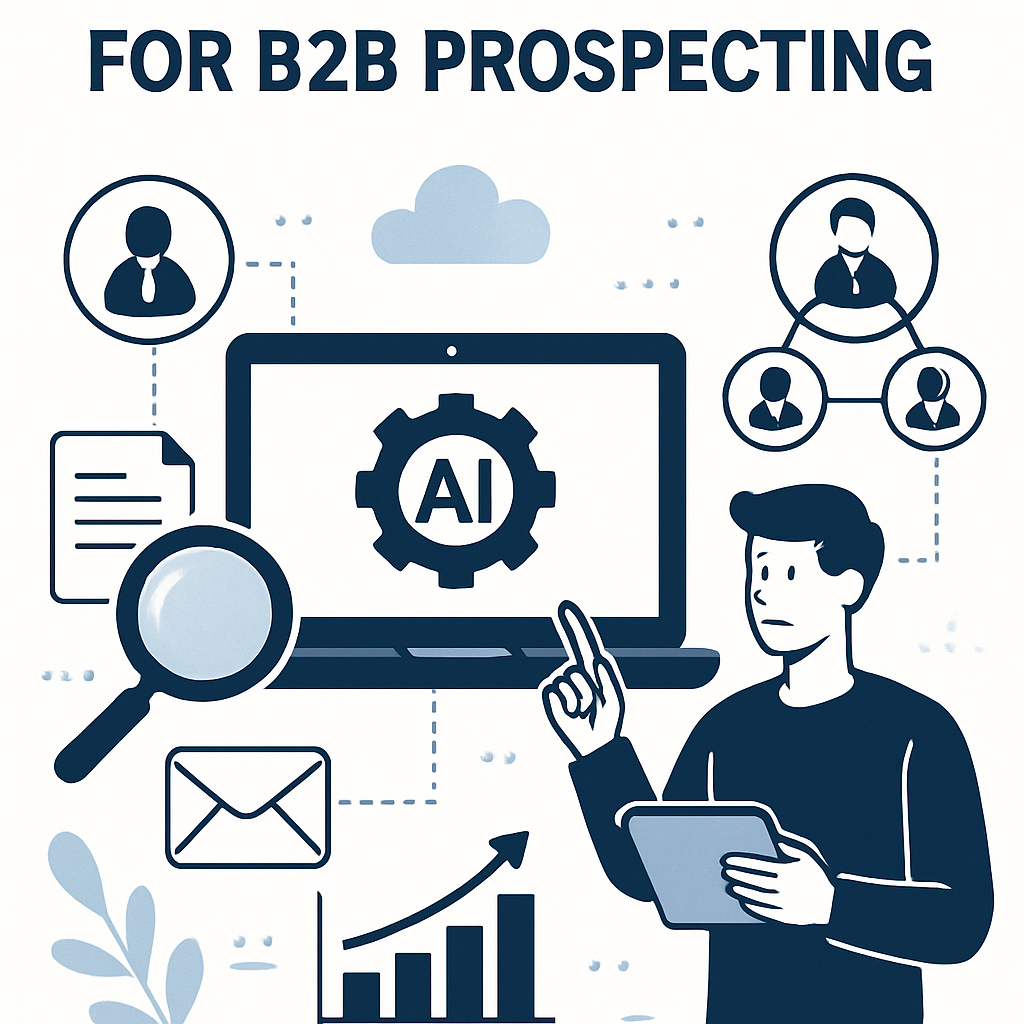
Quick answer: AI lead generation tools automate the full prospecting cycle: they find and validate prospects, personalise outreach, and triage replies, so a small team can reach a large number of decision-makers without proportionally increasing headcount. NineTen provides this as a done-for-you and self-run AI service for Malaysian B2B companies. In June 2026, our cold email engine sent over 35,000 emails to more than 15,000 distinct Malaysian businesses, with every reply triaged by AI before a human stepped in.
What is the difference between AI lead generation and traditional B2B prospecting? Traditional prospecting relies on manual research and one-by-one outreach, making it slow and hard to scale. AI lead generation tools continuously scan data sources, score prospects by fit and intent, and trigger personalised outreach automatically, allowing a small team to reach far more decision-makers without a proportional increase in headcount.
Can a small B2B team use AI prospecting tools without a large marketing department? Yes. AI prospecting tools are designed to reduce the labour required for outreach. A compact team can configure workflows once and let the system handle finding, validating, and following up with prospects on an ongoing basis, removing the need for a large in-house marketing department.
“`html
How AI Lead Generation Tools Work for B2B Prospecting: A Comprehensive How-to-Guide
In an increasingly digital B2B environment, sales and marketing professionals are tasked with delivering not just more leads, but better-quality ones that are more likely to convert. The rapid evolution of AI lead generation tools now enables organizations to automate, personalize, and scale their prospecting efforts with unprecedented precision and efficiency. This comprehensive how-to guide explores the science behind AI-powered prospecting, provides actionable implementation steps, and showcases real-world examples so you can successfully leverage AI lead generation tools for your corporate B2B strategy.
Table of Contents
- Understanding B2B Lead Generation Challenges
- What are AI Lead Generation Tools?
- How Do AI Lead Generation Tools Work?
- Key Components of AI Prospecting Tools
- Benefits of Automated Lead Generation
- Step-by-Step: Implementing AI Lead Generation in Your B2B Strategy
- Real-World Success Stories and Practical Examples
- Common Challenges and How to Avoid Them
- Practical Tips for Maximizing ROI
- The Future of AI Marketing Software in B2B Prospecting
- Conclusion
- References and Further Reading
Understanding B2B Lead Generation Challenges
Identifying and reaching the right decision-makers at the right companies is both an art and a science. Several classic roadblocks hinder successful B2B lead generation:
1. Manual Processes
Traditional prospecting often relies heavily on manual research, data entry, outreach, and follow-up. This method is slow and susceptible to human error, reducing overall productivity.
2. Data Overload and Quality Issues
With the proliferation of big data, sales teams have access to mountains of information but typically lack the tools to filter relevant prospects effectively. This “data deluge” often leads to wasted resources on irrelevant or outdated leads.
3. Poor Lead Qualification
B2B companies frequently grapple with underqualified or mistargeted leads, resulting in low conversion rates. This is especially true when buying signals or intent data are not accurately captured and interpreted.
4. Delayed Follow-Up
In B2B, timing is everything. Long lag times between identifying a lead and reaching out can result in lost opportunities as competitors move faster.
5. Scalability Issues
As your company and potential customer base grow, it becomes increasingly difficult to maintain personalized communication and consistent lead management using traditional methods.
Industry Insight: According to a 2023 HubSpot survey, 61% of B2B marketers state that generating high-quality leads is their biggest challenge. AI lead generation tools are designed to provide a solution by automating processes and enhancing precision.
What Are AI Lead Generation Tools?
AI lead generation tools are specialized software solutions that leverage artificial intelligence to automate, optimize, and personalize the process of discovering, qualifying, and engaging B2B prospects. They go beyond simple automation by:
- Using advanced data analysis and pattern recognition
- Delivering predictive lead scoring
- Customizing outreach and follow-up based on behavior and intent
Core Technologies Used
- Natural Language Processing (NLP): Understands and analyzes text from emails, social media, and other sources.
- Machine Learning Algorithms: Continuously learn from data and outcomes to improve lead identification over time.
- Predictive Analytics: Forecasts which prospects are likeliest to convert.
- Automated Workflows: Orchestrate actions such as sending emails or assigning leads to sales staff without manual intervention.
Integration and Compatibility
Most modern AI prospecting tools integrate seamlessly with widely used CRM systems (like Salesforce or HubSpot), marketing automation platforms (such as Marketo and Pardot), and communication channels.
Notable Examples of AI Lead Generation Tools
- LinkedIn Sales Navigator: Harnesses LinkedIn’s massive professional dataset for intelligent lead suggestions.
- Apollo.io: Combines millions of verified contacts with multichannel outreach and behavioral analytics.
- Leadfeeder: Identifies anonymous website visitors and suggests relevant contacts.
- Cognism: Provides GDPR-compliant data enrichment and intent data.
- Zoho CRM (Zia): Built-in AI assistant for lead enrichment and predictive sales insights.
- Outreach.io: Automates and personalizes communication sequences using AI-driven triggers.
- 6sense: Uses intent data, predictive modeling, and orchestration to identify in-market accounts.
How Do AI Lead Generation Tools Work?
AI lead generation tools automate and optimize every phase of the B2B prospecting cycle through interrelated functions. Here’s how they typically operate:
1. Data Aggregation and Enrichment
AI prospecting tools pull together information from a wide array of sources, such as:
- Public business directories (e.g., Crunchbase, Chamber of Commerce)
- Corporate websites and news
- Social media platforms, especially LinkedIn and Twitter
- Data vendors and third-party APIs (e.g., Clearbit, InsideView)
- Shoehorned CRM/database entries
AI cleans and standardizes the data, correcting inaccuracies, enriching contact and firmographic details, and flagging duplicates to ensure you start with a high-quality dataset.
2. Intelligent Filtering and Lead Scoring
Once a large pool of potential leads is created, AI systems:
- Assess each profile against your “Ideal Customer Profile” (ICP), factoring in industry, geography, company size, job titles, and decision-making authority.
- Evaluate real-time behavioral cues—such as site visits, document downloads, social interactions, and email opens—to gauge buying intent.
- Assign scores using custom rules or machine learning models, ranking and prioritizing the highest-probability prospects at the top.
3. Automated Outreach and Personalization
AI-driven sales and marketing software automates outreach, ensuring every touchpoint is contextually relevant:
- Sends hyper-personalized emails, LinkedIn messages, or SMS at the optimal time based on recipient behavior and timezone.
- Generates dynamic email content, subject lines, and follow-ups tailored to each recipient’s pain points or recent activity.
- Orchestrates multi-step sequences (drip campaigns), automatically adjusting frequency and content based on engagement.
4. Predictive Analytics and Continuous Learning
AI marketing platforms do not just automate tasks—they get smarter over time:
- Analyze the outcome of each campaign—positive replies, bounces, unsubscribes, conversions—and feed this data back into the model.
- Continuously refine audience targeting, lead scoring, and outreach strategies based on historical patterns and feedback loops.
- Recommend next best actions for sales reps, such as the optimal time to call or which prospects to focus on next.
Data Point: A Salesforce State of Sales report (2022) reveals that sales teams using AI lead generation tools enjoy a 35% increase in lead engagement and spent 20% less time on manual data entry.
Key Components of AI Prospecting Tools
Understanding the building blocks of AI marketing software helps corporate teams match solutions to their unique needs.
1. Lead Scoring Engines
Assign a quantitative value to each prospect based on:
- Demographic and firmographic data (job title, industry, company size)
- Behavioral signals (website visits, email response, event attendance)
- Intent data (content read, topics of interest, online searches)
Impact: Lead scoring focuses your team’s energy on the highest-potential prospects, boosting conversion rates.
2. Behavioral Analytics
Track how leads interact with assets such as website pages, emails, webinars, or case studies. AI detects patterns—like increased page visits or more frequent social interactions—to surface “hot” leads.
3. Data Enrichment APIs
Continuously update, supplement, and verify contact and company information. This includes fetching:
- Direct email addresses and mobile numbers
- Social profiles and recent roles/promotions
- Company news, funding updates, and tech stack changes
4. Automated Workflows
Configure sequences that:
- Auto-send follow-up messages after a lead opens an email or downloads a whitepaper
- Notify salespeople when a prospect signals readiness (e.g., requests a demo)
- Trigger CRM updates, calendar invites, or dashboard alerts without manual steps
5. Personalization Engines
Leverage AI to tailor outreach with:
- Dynamic insertion of company names, job titles, relevant case studies, or pain points
- Message variations based on lead segment, seniority, or stage in the buying journey
- Adaptive subject lines and greetings for increased open and reply rates
Benefits of Automated Lead Generation
Modern AI lead generation tools deliver multifaceted benefits that go beyond speed:
Superior Lead Quality
AI’s data-driven targeting and real-time intent analysis mean higher-quality leads, as prospects are pre-qualified based on their fit and readiness.
Increased Speed and Scale
Automation liberates sales teams from repetitive manual tasks, allowing them to engage with dozens—or even hundreds—of targeted prospects daily.
Enhanced Personalization
AI prospecting tools use granular data about each contact to create genuinely personalized outreach at a previously impossible scale.
Cost Efficiency
IBM research cites operational savings of up to 30% in lead generation and qualification activities due to AI automation. This enables leaner teams to achieve bigger results.
Improved Sales and Marketing Alignment
With standardized lead scoring and clear engagement signals, sales and marketing teams work from the same playbook, reducing friction and accelerating handoffs.
Data-Driven Decision Making
With AI marketing software, every detail—from optimal send times to message variants—is backed by analytics. Teams can quickly adapt to what’s working.
Step-by-Step: Implementing AI Lead Generation in Your B2B Strategy
Successfully deploying AI prospecting tools requires careful planning and structured execution. Follow these steps for optimal results:
Step 1: Define Your Ideal Customer Profile (ICP)
- Analyze your high-value customers: What industry, size, and job titles are most common?
- Outline characteristics such as location, revenue, technology stack, pain points, and purchase triggers.
- Update your ICP regularly as your market evolves.
Step 2: Audit and Prepare Your Data
- Review CRM and marketing lists for errors, duplicates, and gaps.
- Normalize data fields (e.g., job titles, industries) for compatibility with AI tools.
- Consider using a pilot subset of your data to avoid complications during the initial rollout.
Step 3: Select the Right AI Lead Generation Tools
Considerations:
- Integration: Will it plug seamlessly into existing CRM, email, and marketing platforms?
- Scalability: Can it support your outreach volume and growth trajectory?
- Features: Does it offer advanced lead scoring, real-time data enrichment, and personalized drip campaigns?
- Reputation and Compliance: Is the vendor GDPR/CCPA compliant? Do they provide transparent data sourcing?
Top Options:
- Apollo.io: Known for robust enrichment and multi-channel outreach.
- Cognism: Strongly focused on compliance, ideal for global B2B sales.
- HubSpot Sales Hub: Combines lead scoring, automation, and deep CRM integration.
- 6sense: Advanced ABM (account-based marketing) and intent data.
Step 4: Configure and Integrate Systems
- Set up integrations between your AI tool, CRM, and communication platforms.
- Define custom lead scoring attributes and fine-tune workflow triggers.
- Arrange alerts, reporting, and notification settings to keep your team in the loop.
Step 5: Pilot and Monitor Campaigns
- Begin with a focused pilot campaign targeting a well-defined audience segment.
- Monitor KPIs such as open rates, response rates, meetings booked, and conversion rates.
- Solicit qualitative feedback from sales reps who interact with new leads sourced by AI.
Step 6: Optimize and Scale
- Review dashboards and reports to uncover strengths and areas needing improvement.
- Retrain AI models periodically using feedback and updated closing data.
- Expand the number of verticals, geographies, or ICP variations in your campaign strategy.
Example Implementation Timeline
- Weeks 1-2: Define ICP and audit existing data.
- Weeks 3-4: Pilot new AI lead gen tool, integrate with CRM, and build workflow templates.
- Month 2: Launch focused campaign, collect analytics, and hold team debriefs.
- Month 3-onward: Expand outreach, iterate, and invest in additional team training.
Real-World Success Stories and Practical Examples
Understanding the tangible impact of AI prospecting tools is best achieved through real B2B scenarios. Here are diverse examples:
Case Study 1: IT Consulting Firm Automates LinkedIn Prospecting
Challenge: A 200-person IT consultancy struggled to consistently fill their sales pipeline due to manual, repetitive LinkedIn outreach.
Solution: They implemented Apollo.io’s AI-driven multi-channel prospecting.
Result:
- Outreach volume increased threefold without additional hires.
- Conversion rates on LinkedIn messages rose from 8% to 19%.
- The sales funnel expanded by 200% within six months.
- Monthly closed deals increased by 38%.
Case Study 2: SaaS Startup Increases Meeting-Set Rate
Challenge: A SaaS vendor had difficulty engaging qualified leads, losing out to competitors due to slow follow-up.
Solution: By integrating Outreach.io and Cognism, they automated email and call cadences based on behavioral triggers (website visits, webinar attendance).
Result:
- Meeting-booked rates climbed by 45% within the first month.
<
Frequently asked questions
How many cold emails can an AI lead generation system realistically send in a month for a Malaysian B2B business?
Volume depends on the setup, but as a real-world example, NineTen's own cold email engine sent over 35,000 emails to more than 15,000 distinct Malaysian businesses in a single month (June 2026), with every reply triaged by AI before a human stepped in.
Do AI lead generation tools work for B2B businesses targeting Malaysian SMEs specifically?
Yes. AI prospecting tools can pull from local data sources and filter by industry, company size, or region, making it practical to target Malaysian SMEs specifically rather than running broad, untargeted campaigns.
What happens after a prospect replies to an AI-generated cold email?
A well-configured system will triage each reply automatically, separating interested prospects from out-of-office responses or unsubscribes, and then route genuine leads to a human or trigger a follow-up sequence on another channel such as WhatsApp.
Is AI lead generation only useful for large companies with big sales teams?
No. AI prospecting tools are designed to reduce the manual workload, so a small B2B team can run high-volume, targeted outreach by configuring workflows once and letting the system handle ongoing prospecting, validation and follow-up automatically.
Get customers on autopilot. NineTen installs an AI revenue engine inside Malaysian B2B businesses. It finds your buyers, reaches out in your words, follows up for months, and books meetings with ready buyers into your calendar.
Chat with us on WhatsApp and see what it could do for your business.
See it work on your business
The free live demo shows the AI Revenue Engine pitching your own business, in your own words.