


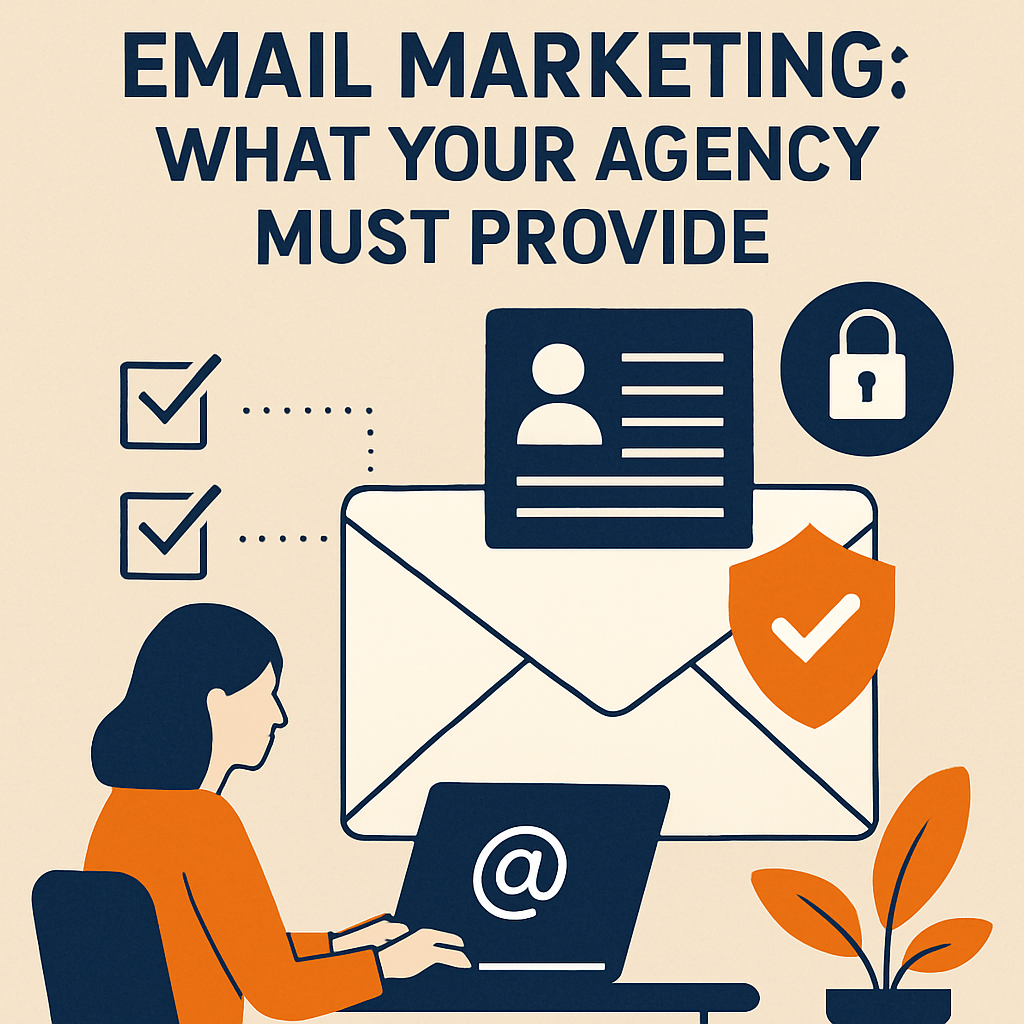
Email Marketing Agencies in Malaysia: PDPA Compliance Explained
TL;DR: PDPA compliance in Malaysia requires businesses to have a lawful basis, either consent or legitimate interest, before sending marketing emails. This guide explains what your outreach strategy must include to stay compliant while generating leads effectively.
Email marketing has cemented its role as the cornerstone of digital outreach and customer relationship management, especially for corporations seeking targeted and measurable results. In Malaysia, this power comes with a unique responsibility: upholding stringent data protection measures as outlined by the Personal Data Protection Act (PDPA). Non-compliance is not just an abstract risk—it can mean severe fines, legal entanglement, and lasting reputational harm. If your agency manages corporate email campaigns in Malaysia, mastering PDPA compliant email marketing is more than good practice—it’s essential for safeguarding your clients and your agency’s success.
In this in-depth, action-driven guide, we demystify the requirements of PDPA compliant email marketing for agencies. You’ll discover the foundational principles of data protection Malaysia mandates, build a comprehensive email compliance checklist, dive into real-world scenarios, and learn to implement bulletproof consent management processes. Whether you’re refining your current strategies or building a compliance-driven framework from scratch, this guide will empower you to offer expert, future-proofed services to your corporate clientele.
Understanding PDPA: A Primer for Corporate Marketers
What is the PDPA and Why Was it Introduced?
Malaysia’s Personal Data Protection Act (PDPA), enacted in 2010 and enforced from 2013, was designed to protect individual privacy by setting out comprehensive rules for processing personal data in commercial transactions. This legislation responds to global and regional trends, echoing Europe’s General Data Protection Regulation (GDPR) and similar laws across Asia. The stakes are high: non-compliance can cost companies up to RM500,000 in fines per offense, along with up to three years of imprisonment for responsible officers.
The PDPA obliges organizations to:
- Obtain explicit, informed consent prior to processing personal data.
- Safeguard personal data against loss, misuse or unauthorized access.
- Be transparent about how personal data is used, processed, and stored.
- Provide data subjects the right to access, correct, or delete their data.
Defining PDPA Compliant Email Marketing
PDPA compliant email marketing means every email campaign both aligns with clients’ business strategies and strictly follows the provisions of the PDPA. For agencies, this means designing email workflows that guarantee:
- Explicit consent: No assumption-based marketing. All recipients have actively opted in and know how their data will be used.
- Transparently managed data: Every step of data collection, use, and dissemination is documented, accessible, and defensible.
- Security: Email lists, campaign statistics, and personal data are protected against unauthorized breaches.
- Honoring data subject rights: Timely responses to requests for data correction, deletion, or processing limitations.
Example: What Does Non-Compliance Look Like?
Imagine an agency sends a promotional campaign for a financial client using an old mailing list without validating consent. A recipient complains, triggering a PDPA audit. The agency cannot show when or how the recipient gave consent, resulting in fines and intense scrutiny. The ensuing media coverage also damages both the agency’s and client’s brands.
The Increasing Importance of Data Protection in Malaysia
The Business Case for Robust Data Protection
Within the last few years, data protection has transformed from a compliance issue to a core business imperative. According to the 2022 Data Privacy Benchmark Study by Cisco, organizations report positive financial returns from privacy initiatives, such as increased client trust and operational resilience.
A 2021 survey by KPMG Malaysia found:
- 74% of corporations are more concerned about data privacy now than two years ago.
- 85% of Malaysian consumers are more likely to support brands they trust to protect their data.
- Data breaches have a long tail: more than half of corporate leaders cite lasting impacts on customer trust and brand reputation after an incident.
Real-World Impact: Case Studies of Compliance and Non-Compliance
Case Study 1: Insurer Faces Penalties for Consent Mishandling
A Malaysian insurance company sent promotional emails using a database acquired from third-party sources. Upon investigation, authorities discovered the company lacked evidence of consent for thousands of email recipients. The result: RM120,000 in fines and mandatory public apology—a situation that led to lost customers and increased client churn.
Case Study 2: Tech Startup Builds Trust With Transparent Consent
In contrast, a local software-as-a-service startup adopted robust consent management from the outset. Subscribers received detailed opt-in forms, and the company sent regular reminders explaining data use and privacy controls. As a result, the startup achieved a 35% higher campaign open rate, reduced unsubscribe rates by 50%, and received positive media coverage for their proactive approach—attracting enterprise clients who valued strong data stewardship.
Building Your PDPA-Compliant Email Compliance Checklist
1. Consent Management: Laying the Groundwork for Legal Compliance
Consent is the linchpin of PDPA compliant email marketing. Unlike opt-out norms, PDPA demands clear, affirmative consent before sending marketing communications.
Practical Steps for Consent Management
- Crafting Explicit Consent Requests
Ensure sign-up forms use simple, precise language. Avoid ambiguity—statements like “Subscribe for updates and offers from [Client]” are clear, whereas “Enter your email for news” is not. - Double Opt-In as an Industry Best Practice
After initial subscription, send a confirmation email requiring the recipient to actively opt-in. This two-step process ensures higher quality lists and proof of consent. - Robust Consent Records
Record every instance of consent with time, date, user action, and context. - Enabling Easy Withdrawal of Consent
Every email must offer a prominent, hassle-free unsubscribe link. Users should be able to update preferences or withdraw consent without roadblocks.
Example: B2B Event Marketing and Consent
An agency managing B2B events introduced a webinar registration form with a single opt-in. After receiving complaints, they shifted to double opt-in and specified exactly what communications registrants would receive. Complaint rates dropped by 68% and attendee engagement improved.
2. Personal Data Security: Safeguarding Against Breaches
How Agencies Can Achieve Data Security
- Encryption: Use SSL/TLS and AES-256 encryption.
- Access Controls: Limit permissions and use audit trails.
- Regular Audits: Schedule quarterly security checks.
- Secure Third-Party Integrations: Ensure vendors are PDPA-compliant.
Case Study: E-Commerce Agency Avoids Disaster
An e-commerce agency worked with a cloud-based email platform but neglected to audit access permissions. When a junior intern unintentionally downloaded a full customer list, it was almost leaked online. The agency invested in stricter permission controls and now reviews access rights monthly—zero incidents since implementation.
3. Transparent Communication: Informing Data Subjects
Implementation Tips
- Detailed Privacy Notices: Add concise privacy details on forms.
- Purpose Specification: Clarify the intent behind data collection.
- Comprehensive Privacy Policy: Link your full policy in footers.
Example: Financial Services Firm Improves Client Loyalty
A financial services agency implemented ‘just-in-time’ privacy notifications during lead capture. Subscriber trust and engagement rose, and the firm noted fewer complaints about unwanted messages.
4. Simple, Immediate Opt-Out Mechanisms
Actionable Steps
- Unsubscribe Link: Prominently visible in every email.
- One-Click Opt-Out: Streamline the process; avoid extra steps.
- Timely Processing: Handle opt-out within 24-48 hours.
- Confirmation Messages: Send polite opt-out confirmation.
Example: Retailer Prevents Blacklisting With Frictionless Opt-Out
A leading online retailer saw spam complaints drop sharply after making opt-out options easily accessible.
5. Documentation: Your First Line of Defense in an Audit
Core Documentation Practices
- Consent Logs: Maintain complete opt-in records.
- Campaign Records: Archive email content and lists.
- Opt-Out and DSR Logs: Keep track of data subject actions and requests.
- Annual/Quarterly Compliance Reports: Conduct regular internal reviews.
Example: Consulting Agency Passes Regulatory Audit
A consulting agency faced a random PDPA audit after a client complaint. Their extensive documentation helped resolve the issue quickly and increased client trust.
Summary Email Compliance Checklist
| Checklist Item | Action Required |
|---|---|
| Obtain Explicit Consent | Use clear, positive opt-in forms; record every instance |
| Provide Privacy Notice | Clearly displayed notice and easy-to-find privacy policies |
| Maintain Data Security | Encrypt data; restrict and document access; regular audits |
| Enable Easy Opt-Out | Prominent unsubscribe link, fast processing, clear confirmation |
| Document Every Action | Store logs, communications, and DSR responses for seven years |
Advanced Consent Management: Technology and Best Practices
Key Features of Consent Management Tools
- Automated Consent Capture
- Preference Centers
- Sync Across Channels
- Granular Reporting
Leading Consent Management Solutions
- Mailchimp
- HubSpot
- Salesforce Marketing Cloud
- OneTrust/TrustArc
Example: Global Brand Ensures Compliance During Regional Expansion
A multinational company launching in Malaysia used OneTrust to centralize consent management and DSRs regionally.
Integrating Data Protection by Design: Embedding Privacy in Every Workflow
Principles of Privacy by Design
- Data Minimization
- Default Security
- Ongoing Training
- Transparent Processes
Example: Team Training Prevents Data Mishap
After an email was sent incorrectly exposing recipient emails, an agency unveiled mandatory PDPA training with significant results.
Handling Data Subject Requests (DSRs): A How-To for Agencies
Step-by-Step for Agencies:
- Acknowledge the request promptly.
- Verify requester identity.
- Action requests within 21 days.
- Document everything thoroughly.
- Respond clearly to data subjects.
Case Study: B2B SaaS Firm Streamlines DSR Handling
A SaaS firm deployed DSR templates and a resolution team. Request handling became faster and clients noticed the improvement.
Going Beyond Compliance: Building Trust, Value, and Market Differentiation
Practical Strategies to Build Trust
- Regular Transparency Updates
- Proactive List Audits
- Breach Preparedness
- Humanized Communication
Example: Fashion Retail Giant’s Loyalty Program
A fashion retail client rebuilt its loyalty program around clear consent, resulting in a 32% rise in engagement and positive media responses.
Debunking Common Myths About PDPA and Email Marketing
- Myth: “Pre-checked opt-in boxes are sufficient.”
Fact: PDPA requires active, positive opt-in. - Myth: “Only C2C marketing is covered.”
Fact: B2B communications using personal data are also covered. - Myth: “Transactional emails are exempt.”
Fact: Only purely service-based emails are exempt. - Myth: “Once I get consent, I never have to ask again.”
Fact: Consent may need renewal when purposes change.
Frequently Asked Questions: Corporate Email Marketing and PDPA
Q: What should I do with legacy email databases that lack clear consent?
A: Initiate a re-permissioning campaign or remove them.
Q: Does PDPA apply to agencies based outside Malaysia servicing Malaysian clients?
A: Yes. If you process data of individuals located in Malaysia, PDPA applies.
Q: How often should PDPA compliance be reviewed?
A: At minimum, annually. Quarterly for high-volume or high-risk cases.
Q: Do opt-out requests need to be processed immediately?
A: Ideally within 24–48 hours. PDPA allows up to 14 days.
Q: Should emails include the company’s physical address?
A: Yes. It builds trust and is often a legal requirement.
Conclusion: Delivering PDPA-Compliant Email Marketing Excellence
PDPA compliant email marketing is the hallmark of a modern, ethical, and future-ready agency in Malaysia. By embedding data protection into every client campaign, your agency isn’t just avoiding penalties—you’re building security, trust, and a market advantage for your clients.
Key Steps to Take:
- Institute robust consent management at every touchpoint.
- Apply stringent security measures to safeguard data.
- Communicate transparently and empower subscribers with real choices.
- Act immediately on opt-out and data subject requests.
- Document every process for defensible compliance.
- Invest in ongoing staff training and modern tools.
Ready to build a PDPA compliant email marketing powerhouse? Start today—because your agency’s reputation depends on it, and your clients’ futures demand it.
Ready to scale your B2B email outreach? Discover how NineTen AI email marketing uses the AI Revenue Engine to find verified Malaysian decision-makers and send personalised outreach automatically.
Further reading: Ecommerce Email Marketing Agency Malaysia
When Compliant Outreach Is Just the Start
Getting your email campaigns PDPA-ready is one part of the puzzle; the harder part is consistently starting qualified B2B conversations in the first place. NineTen now runs done-for-you B2B lead generation for Malaysian SMEs, using an AI SDR that prospects, sends outreach, qualifies replies on WhatsApp, and books sales meetings without a human SDR team. If that adjacent problem sounds familiar, the page below explains how it works.
How Malaysian B2B companies use AI for lead generation
Get customers on autopilot. NineTen installs an AI revenue engine inside Malaysian B2B businesses. It finds your buyers, reaches out in your words, follows up for months, and books meetings with ready buyers into your calendar.
Chat with us on WhatsApp and see what it could do for your business.
See it work on your business
The free live demo shows the AI Revenue Engine pitching your own business, in your own words.