


Quick answer: To build a verified business email list in Malaysia, define your ideal customer profile first, then source company contacts through reputable vendors, validate every address for syntax, domain validity and mailbox existence, and remove role-based addresses and known spam traps before sending. NineTen.ai provides done-for-you B2B cold email outreach for Malaysian businesses, running over 35,000 emails monthly to more than 15,000 distinct Malaysian companies, with every reply triaged by AI.
Is cold email outreach to businesses legal in Malaysia? Yes, cold B2B email outreach is generally permitted in Malaysia when you target company addresses, include a clear opt-out mechanism, and do not mislead recipients. It is advisable to review the Communications and Multimedia Act and relevant personal data guidelines before launching any campaign.
How do I reduce bounce rates on a Malaysian B2B email list? Run your list through an email verification tool to check syntax, domain validity and mailbox existence, then remove role-based addresses and known spam traps before sending. Sending to an unvalidated list inflates bounce rates and damages your sender reputation, reducing deliverability for future campaigns.
TL;DR: The key steps involve defining your ideal customer profile, building a verified contact list, crafting personalised outreach, and tracking replies. Malaysian B2B teams that follow this process consistently generate qualified pipeline without relying solely on referrals or ads.
“`html
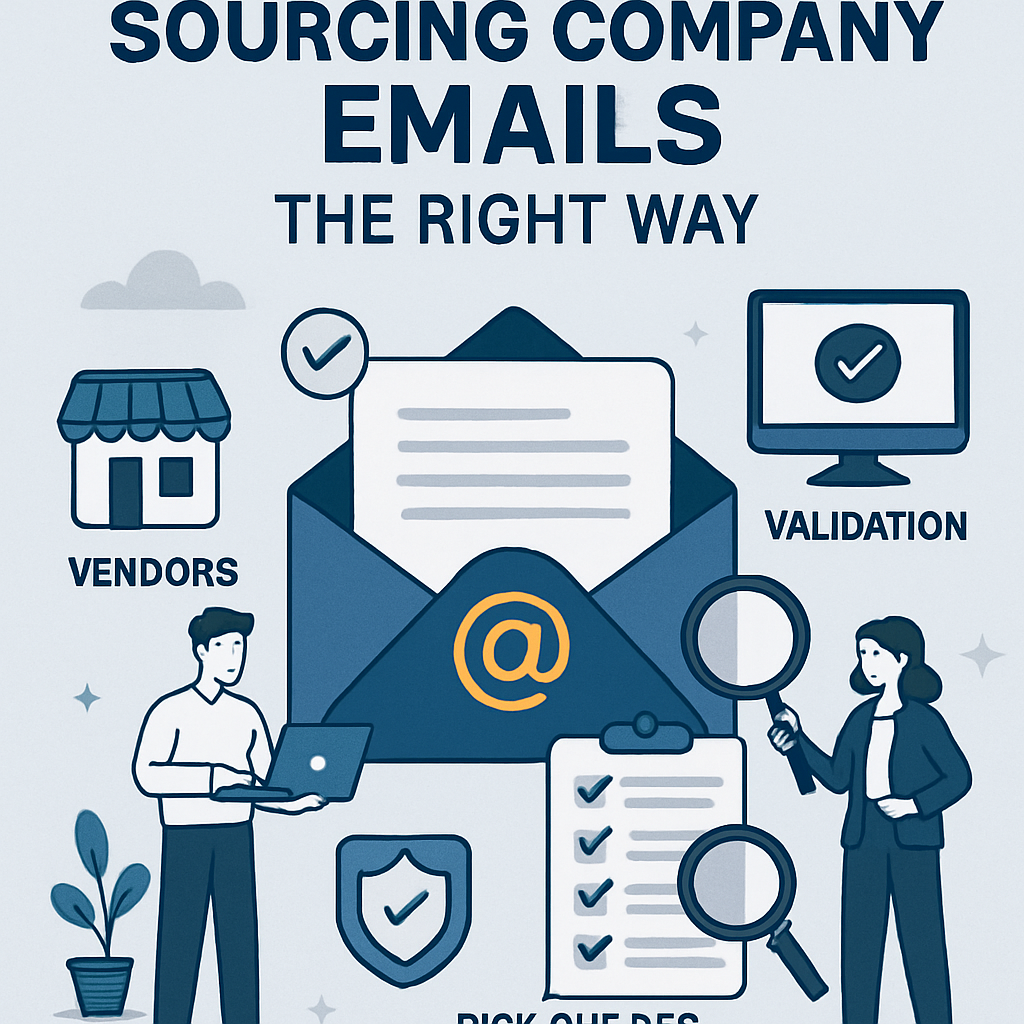
Sourcing Company Emails the Right Way: Vendors, Validation & Risk Checks
Introduction
In the rapidly evolving, digital-first landscape of corporate Malaysia, one asset remains at the heart of B2B growth strategies: the business email list. Building a business email list Malaysia is no longer just about accumulating addresses; it’s about constructing a reliable, validated pipeline to decision-makers and influencers in your target sectors. When sourced, maintained, and used correctly, Malaysia company emails become a powerful gateway for partnerships, lead generation, and sustainable corporate relationships.
However, sourcing company emails is fraught with challenges—ranging from data quality and legal compliance to the ever-present risk of falling into spam traps or PR crises. This how-to guide draws on real industry anecdotes, current best practices, and actionable frameworks to help corporate professionals in Malaysia navigate the intricacies of sourcing company emails the right way. Whether you are refreshing an existing list or launching a new campaign, this article equips you to source, verify corporate emails, and implement data vendor due diligence with confidence and compliance.
Why Building a Verified Business Email List in Malaysia Matters
The Strategic Value of a Verified Email List
The importance of a well-maintained, verified business email list in Malaysia has never been higher. According to Statista, email marketing delivers an average ROI of $42 per $1 spent—surpassing nearly every other digital marketing channel. However, the real value comes from data quality and its strategic utilization.
Key Benefits:
- Maximum Deliverability: A thoroughly validated list lowers bounce rates, protects sender reputation, and keeps your corporate emails out of spam folders.
- Targeted Engagement: Verified emails allow for precise segmentation—by role, industry, company size, and location—enabling personalization that increases engagement rates and conversion.
- Regulatory Protection: Adhering to Malaysia’s Personal Data Protection Act (PDPA) and international regulations shields your organization from costly legal repercussions.
Scenario:
Imagine a Kuala Lumpur-based tech consultancy running its first outbound campaign using a list bought online. Without email validation, over 40% of emails bounce. Their sender domain gets flagged, and deliverability drops to virtually zero—even for legitimate contacts. Their takeaway? List quality is more important than sheer quantity. Proper practices up front would have saved time, money, and reputation.
Step 1: Sourcing Malaysia Company Emails—Vendor Assessment is Critical
Direct Sourcing vs. Data Vendors: Weighing Your Options
Organizations typically face two main paths for sourcing Malaysia company emails:
-
Direct Sourcing
- This hands-on approach involves collecting email addresses from:
- Official company websites
- Industry association directories
- Trade show attendee lists
- Social media platforms, e.g., LinkedIn
Pros: Increased accuracy, greater control over consent and compliance, and high relevance for your target audience.
Cons: Time-consuming, resource-intensive, and often yields a smaller pool of contacts.
-
Third-Party Data Vendors
- Vendor-sourced lists can provide ready access to thousands of emails, supposedly aggregated, cleaned, and segmented according to your parameters.
Pros: Fast acquisition, large volumes, potential for rich segmentation.
Cons: Risks of outdated, inaccurate, or improperly sourced data; compliance gaps; variable quality.
Expanded Case Study:
A major Kuala Lumpur property conglomerate rushed to engage a local data vendor advertising “fresh, verified” Malaysia company emails. Eager to beat competitors, they proceeded without requesting compliance documentation or data samples. The result? Nearly half the purchased emails were inactive or generic (info@, admin@). Subsequent campaigns triggered a spam block, and the conglomerate had to spend six months rebuilding sender credibility—losing several million ringgit in delayed project launches.
How to Thoroughly Vet Your Data Vendor
Given the risks, data vendor due diligence is not optional. Use the following comprehensive approach:
-
Review Credibility and Track Record
- Look for long-standing vendors with proven clients in Malaysia.
- Examine third-party reviews, client testimonials, and independent case studies.
- Verify any claims of previous work in your industry or with similar corporate structures.
-
Demand and Test Sample Data
- Always obtain a 50–100 sample subset.
- Use email verification software to check deliverability, role-based vs. personal emails, and accuracy of accompanying fields.
-
Assess Compliance Measures
- Insist on written confirmation the vendor complies with the PDPA, CAN-SPAM, and GDPR (if dealing with overseas partners).
- Review their data collection process—was consent obtained? How?
- Ask for documented removal protocols for opt-out requests.
-
Analyze List Segmentation Capabilities
- Ensure your requirements are met—can you filter by sector, company size, or title?
- For B2B tech deals, do they identify IT managers vs. C-suite executives? The granularity determines campaign effectiveness.
-
Investigate Support and SLA (Service Level Agreement)
- A reputable vendor will guarantee a minimum deliverability rate (e.g., 90%) and offer compensation for undeliverable leads.
Red Flags:
- Refusal to provide samples
- No clear documentation of data sourcing methods
- Overly generic “verified” claims
- Nonexistent privacy policy
Best Practice Example:
A Penang-based supply chain company opted for an international vendor after reviewing three others. They insisted on a compliance interview and a 100-email sample. Verification caught 18% outdated addresses, and only the selected vendor offered a 6-month update guarantee—protecting the company from future data decay.
Step 2: How to Verify Corporate Emails for Maximum Impact
No matter the source, even meticulously curated lists will degrade over time. People change jobs, companies rebrand, or emails become dormant.
Understanding the Costs of Neglecting Verification
- Deliverability Penalties: ISPs track bounce rates. A spike above 5% can lead to blacklisting, throttling, or permanent domain reputation damage.
- Wasted Marketing Budget: Invalid emails mean wasted outreach efforts, lower response rates, and reduced campaign ROI.
- Legal Liability: Sending to non-consenting or obsolete addresses puts you at risk under data privacy regulations.
Client Anecdote:
A KL-based professional services firm used a list from a trusted local chamber, assuming it was fully up-to-date. When their bounce rate exceeded 30%, their domain’s emails started landing in spam—jeopardizing critical client communications and internal operations.
Modern Methods to Effectively Verify Corporate Emails
-
Leverage Advanced Email Verification Services
- Use platforms like ZeroBounce, NeverBounce, or Hunter.io.
- Such services check:
- Syntax and formatting errors
- Validity of domains and MX records
- Temporary/disposable addresses
- Catch-all domains that may never reach a decision-maker
-
Manual Cross-Checking
- Cross-reference samples with LinkedIn profiles or company “team” pages.
- For high-value targets (C-suite, heads of department), visit their LinkedIn profiles. For instance, a CFO who left in 2022 may have an obsolete company email.
-
Test Drip Campaigns Before Major Launches
- Segment a small batch (2–5% of the list) for a personalized yet non-critical message (“We’d like to confirm your interest in…”).
- Monitor bounce rates, open rates, and spam complaints.
-
Ongoing List Scrubbing
- Set automated quarterly verification runs.
- Remove hard bounces, repeated soft bounces, and unsubscribes immediately.
-
Identify and Purge Role-Based Accounts
- Info@, admin@, or sales@ receive low engagement and can introduce spam complaints.
- Use these only for specific campaigns, and never for personalized outreach.
In-Depth Case Study:
GlobalElectro, a Malaysian electronics supplier, employed monthly list verification after a major bounce event. By investing in a robust verification platform and allocating staff for bi-weekly manual spot checks, they maintained a bounce rate under 1%, allowing crucial partnership emails and new client pitches to consistently reach decision-makers.
The Impact: Quantifiable Results from Verification
Before Verification:
- Average open rate: 9%
- Bounce rate: 18%
- Leads generated: 2 per campaign
After Structured Verification:
- Average open rate: 22%
- Bounce rate: 0.7%
- Leads generated: 12 per campaign
This demonstrates the compounding benefits of continuous email hygiene for B2B firms.
Step 3: Data Vendor Due Diligence and Risk Mitigation
Email sourcing is not merely a technical matter—but a complex landscape of compliance, reputation, and operational risk.
Importance of Data Vendor Due Diligence
What Is Due Diligence?
Vendor due diligence is a formal, evidence-based process that ensures any data you purchase or license—especially sensitive contacts like Malaysia company emails—meets regulatory, operational, and strategic standards. A missed step may result in:
- Fines or sanctions under the Malaysia PDPA, which can reach RM500,000 for privacy violations
- ISP and inbox provider blacklisting, reducing your overall email effectiveness
- Company reputation-damaging press coverage or shareholder consequences
Expanded Example:
An HR tech SaaS in Johor enrolled a vendor without GDPR and PDPA compliance proof. Three months later, they faced an audit after a privacy complaint—revealing improper sourcing without consent. Result? A court-ordered investigation, a six-figure fine, and permanent damage to their client trust.
Practical Steps for Comprehensive Vendor Due Diligence
-
Demand Source Documentation
- Get clear, written sources and collection methods.
- Validate that data was obtained with opt-in or legitimate interest.
- Keep vendor claims for future audits or disputes.
-
Assess List Freshness
- Ask for the date of the last refresh and update cycle.
- High-quality vendors refresh data at least quarterly.
- Avoid datasets older than 6 months—decay rates rise sharply over time.
-
Conduct Sample Audits
- Use different verification tools (not just the vendor’s preferred software).
- Manually reach out or connect via LinkedIn to at least 15–20 randomly selected emails.
- Document anomalies and request remediation if needed.
-
Insist on Compliance Proof and SLA
- Only contract vendors ready to sign a data processing agreement with specific legal guarantees.
- Set bounce rate thresholds and penalties for excessive undeliverables.
-
Research Vendor’s Breach and Regulatory History
- Search public databases, news outlets, and reputable forums.
- Repeated breaches or government warnings are serious red flags.
Proactive Tactic:
Maintain a digital “vendor due diligence file.” Keep all documents, emails, contract terms, and test results. Should the government or a partner request proof of compliance, this archive supports your business’s diligence and due care.
Practical Guide: Step-by-Step to a High-Quality Business Email List in Malaysia
1. Clearly Define Your Target Corporate Persona
Identify specifics before sourcing:
- Industry/sector focus (e.g., healthcare, fintech, logistics)
- Desired company size (SME, large enterprise, MNC)
- Seniority or decision-making role (CEO, CFO, Procurement Head)
- Geographic preferences (Klang Valley, Penang, nationwide)
Why it matters:
Generic lists dilute campaign impact. The more precise your persona definition, the more relevant (and effective) your outreach.
2. Choose and Vet Sourcing Channels
- Official Company Registries: Suruhanjaya Syarikat Malaysia (SSM), Bursa Malaysia for public firms
- Industry or Chamber Lists: E.g., Malaysia International Chamber of Commerce and Industry (MICCI), regional chambers, and sector-specific trade bodies (property, electronics)
- High-Quality Data Vendors: After thorough, documented due diligence
- B2B Events, Trade Shows: Always obtain express consent if collecting emails in person
Example:
A logistics service in Johor found the best ROI sourcing emails directly from the SSM and supplementing with multi-sector Chamber events—combining public data with explicit consent for compliance.
3. Before Purchase: Test and Validate
- Ask for 10–20% of the proposed list as a preview
- Run automated verification (using tools like NeverBounce)
- Perform manual ‘spot checks’ by searching for key contacts on LinkedIn
4. Full-Scale Verification and Cleansing
- Use tiered email verifiers to remove invalid, dormant, and disposable addresses
- Identify role-based or generic catch-all addresses (e.g., accounts@, team@)
- Schedule quarterly refreshes/additions to prevent list decay
5. Secure Storage and Legal Compliance
- Store within an encrypted CRM or secure, access-controlled database (Salesforce, HubSpot, Zoho, or similar platforms)
- Restrict access to only trained marketing/sales and compliance staff
- Maintain usage and consent logs for each list segment
- Immediate removal of unsubscribes and opt-outs is legally mandated
6. Responsibly Engage and Maintain
- Start campaigns with informative, non-intrusive welcome emails (avoid hard sells)
- Continuously monitor all campaign metrics: bounces, unsubscribes, complaints
- Schedule automated reminders for list reviews and full audits every 3–6 months
Avoiding Common Pitfalls: Lessons From Corporate Malaysia
Pitfall 1: Overdependence on a Single Data Vendor
Case Example:
A Johor-based MSP leaned on an exclusive vendor for quarterly email list updates. When the vendor temporarily ceased operations after a legal dispute, all sales campaigns screeched to a halt as no alternative source was in place.
Looking to automate your B2B email outreach in Malaysia? See how AI email marketing Malaysia with NineTen AI helps you find verified prospects and book more meetings on autopilot.
Evaluating B2B prospecting tools? See how NineTen AI compares: NineTen AI vs Apollo.io | NineTen AI vs Instantly | NineTen AI vs Lemlist
Further reading: B2B Email List Building Malaysia: Grow Your Leads Faster
Get customers on autopilot. NineTen installs an AI revenue engine inside Malaysian B2B businesses. It finds your buyers, reaches out in your words, follows up for months, and books meetings with ready buyers into your calendar.
Chat with us on WhatsApp and see what it could do for your business.
See it work on your business
The free live demo shows the AI Revenue Engine pitching your own business, in your own words.