


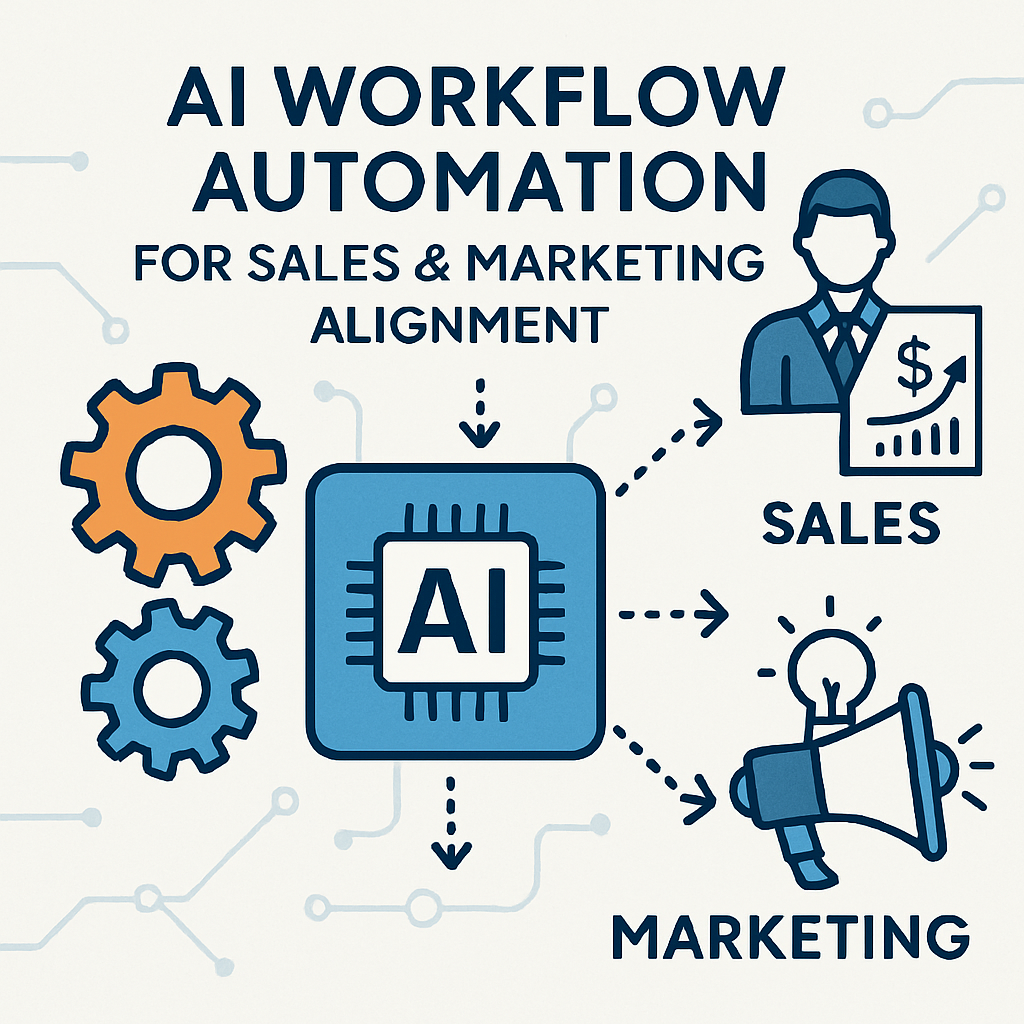
AI Workflow Automation for Sales & Marketing Alignment: A Step-by-Step How-to Guide
In today’s fiercely competitive business environment, corporate leaders constantly strive to enhance sales productivity and prove the tangible value of marketing efforts. Persistent silos between sales and marketing teams often hinder revenue generation, drive up operational costs, and create friction in the customer journey. Enter AI sales workflow automation: a technology revolutionizing how modern businesses achieve marketing and sales alignment, streamline communication, and power insightful analytics.
This in-depth guide is designed for corporate professionals eager to unlock sustained commercial growth. We will carefully walk through the principles, technologies, real-life case studies, and step-by-step strategies to help your organization transform fragmented operations into a well-orchestrated revenue machine. Whether you’re a C-suite executive, director of sales, or head of marketing, you’ll discover actionable methods for deploying AI sales workflow automation to foster seamless marketing and sales alignment.
Table of Contents
- Understanding the Sales & Marketing Alignment Challenge
- Defining AI Sales Workflow Automation
- Building the Business Case for Marketing and Sales Alignment
- AI-Driven Technologies: CRM Workflow Automation and Lead Routing AI
- Real-World Success Stories and Case Studies
- Comprehensive Steps to Implement AI Workflow Automation
- Best Practice Tips for Lasting Success
- Common Pitfalls & Overcoming Key Alignment Challenges
- Future Outlook for AI Workflow Automation in Sales & Marketing
- Conclusion: Your Roadmap to Seamless Sales & Marketing Alignment
1. Understanding the Sales & Marketing Alignment Challenge
Despite pursuing the same high-level goals—revenue growth, increased market share, customer loyalty—sales and marketing teams often operate in isolation. Each department has separate metrics, distinct processes, and sometimes diverging priorities. The result? Misaligned objectives, inefficient lead management, missed opportunities, and wasted resources.
Common Sources of Sales & Marketing Misalignment
- Unclear Lead Qualification Criteria: Sales often complains about the quality of leads supplied by marketing, while marketing feels their efforts go to waste if follow-up is slow or incomplete.
- Fragmented Data and Reporting: Disparate reporting systems and separate databases make it hard to gauge combined efforts or share meaningful insights.
- Communication Gaps: Lack of real-time updates means sales teams may not be informed of new campaigns, product launches, or lead nurturing efforts, and vice versa.
- Manual, Error-Prone Handoffs: Reliance on spreadsheets or emails to transfer leads increases the risk of loss and delays.
Industry Snapshot:
A 2023 LinkedIn State of Sales report revealed that 87% of sales and marketing leaders see alignment as crucial, but just 45% believe their teams are closely aligned in day-to-day operations. The cost? Up to 10% of annual B2B revenue lost to poor handovers and slow follow-up (Forrester).
Example:
A global enterprise software provider regularly struggled with delayed follow-ups due to manual lead transfer from marketing to sales. This lag allowed competitors to capture warmed-up leads, directly impacting pipeline velocity.
2. Defining AI Sales Workflow Automation
AI sales workflow automation refers to leveraging artificial intelligence technologies—such as machine learning, natural language processing, and predictive analytics—to optimize and automate repetitive, complex, and data-driven tasks within sales and marketing workflows. These intelligent systems not only increase operational efficiency but also foster a transparent, collaborative environment where both teams operate from a single source of truth.
Key Elements of AI Sales Workflow Automation
- CRM Workflow Automation: Automating updates, notifications, reminders, and lead scoring within your CRM system (e.g., HubSpot, Salesforce, Zoho CRM).
- Lead Routing AI: Instantly and intelligently assigning leads to the most appropriate sales reps or teams based on territory, expertise, workload, and real-time data.
- Predictive Analytics: Using past behavior data to prioritize high-value leads and anticipate customer needs.
- Multi-Channel Engagement Orchestration: Coordinating personalized marketing and sales touchpoints (email, SMS, social, chatbots) without manual intervention.
Example in Practice:
A technology consultancy uses AI to analyze incoming leads and automatically route high-value prospects to enterprise sales executives while sending SMB inquiries to a separate team specializing in quick-turn deals.
How AI Differs from Traditional Automation
While traditional tools rely on static rules, AI evolves through data. Algorithms learn from previous successes and failures, continuously refining criteria for lead scoring, routing, and engagement.
Quick Fact:
According to a 2024 Gartner study, organizations that embrace AI workflow automation achieve up to 53% faster lead response times and report a 44% boost in conversion rates versus those using manual or rules-based processes.
3. Building the Business Case for Marketing and Sales Alignment
The quantifiable impact of strong sales and marketing alignment—supercharged by AI automation—cannot be overstated. Research consistently shows that connected teams generate more pipeline, close more deals, and achieve higher customer satisfaction.
Compelling Data Points
- 208% Higher Revenue: Companies with tight sales and marketing alignment generate more than double the marketing-derived revenue (Harvard Business Review).
- 36% Increase in Customer Retention: Alignment initiatives, especially those powered by CRM workflow automation, correlate with meaningful improvements in customer loyalty (MarketingProfs).
- Reduced Revenue Leakage: Forrester estimates up to 10% annual B2B revenue is drained by poor lead handoff and missed opportunities.
Qualitative Impact
- Improved Customer Experience: When marketing and sales operate as a single unit, customer communications are timely, relevant, and consistent, leading to better buyer journeys and higher satisfaction scores.
- Data-Driven Insights: Centralized and synchronized analytics enable smarter, more strategic decision-making.
Illustrative Example:
A financial services firm implemented unified dashboards accessible to both departments. AI-powered analytics provided a real-time view of campaign performance and sales impact. As a result, quarterly cross-team pipeline review meetings shifted from blame-gaming to collaborative strategy sessions—boosting morale and pipeline throughput.
4. AI-Driven Technologies: CRM Workflow Automation and Lead Routing AI
AI’s most transformative impact lies in eliminating manual bottlenecks and enforcing standardized, intelligent workflows across teams. Two pivotal technologies make this possible: CRM workflow automation and lead routing AI.
CRM Workflow Automation: Turning Data into Action
Modern CRM systems, notably Salesforce, HubSpot, and Zoho CRM, now come equipped with advanced AI modules to automate virtually any process.
Capabilities include:
- Lead and Account Scoring: AI assesses behavioral and firmographic data to rank prospects by likelihood to convert.
- Auto-Triggered Reminders & Tasks: Emails, follow-up calls, and nurture campaign tasks are auto-generated based on lead actions.
- Synchronization with Marketing Automation: Integrates seamlessly with platforms like Marketo or Pardot for cohesive, end-to-end automation.
- Centralized Reporting: AI-powered dashboards provide role-specific, near real-time visualizations accessible to both sales and marketing leaders.
Case Example:
A leading SaaS recruitment platform implemented CRM workflow automation that triggered task assignments within five minutes of form submission. This rapid response window yielded a 63% increase in lead-to-meeting conversions within a single quarter.
Lead Routing AI: Matching Prospects with the Perfect Rep
Unlike static round-robin or geography-based lead assignment, lead routing AI evaluates multiple factors dynamically:
- Expertise of available sales reps
- Current workload and recent performance
- Historical conversion data by team/individual
- Real-time lead scoring and engagement signals (like website visits, email opens)
Example:
A manufacturing firm with regional sales teams uses lead routing AI that analyzes each rep’s experience and win rate with specific product lines. High-potential leads for a new offering are funneled to subject-matter experts, accelerating opportunities and reducing ramp-up times.
Key Statistics:
Salesforce research indicates leads distributed using AI-driven routing are contacted 95% faster and convert 21 times more often than leads assigned through traditional methods.
5. Real-World Success Stories and Case Studies
Nothing illustrates the value of AI sales workflow automation better than actual implementations. Here are several diverse scenarios demonstrating tangible benefits for businesses of various sizes and industries.
Case Study 1: B2B Fintech Vendor Transforms Lead Response
Challenge: The company saw leads accumulate in their marketing platform, but over 30% received no follow-up within the critical 48-hour window.
Solution: By integrating CRM workflow automation tied to their marketing engine, follow-ups were triggered automatically and assigned based on rep bandwidth and territory.
Results:
- Lead response time plunged from 42 hours to just 27 minutes.
- Marketing-attributed revenue increased by 61% over 12 months.
- Both sales and marketing teams praised “total visibility” into every lead’s journey.
Case Study 2: Global Logistics Provider Elevates Routing Precision
Challenge: Inconsistent lead assignment led to mismatched opportunities—enterprise deals going to inexperienced reps, and urgent SMB requests sitting idle.
Solution: The company deployed lead routing AI to match incoming leads with reps skilled in particular verticals or deal complexities. The system also factored in individual rep workload to prevent overload.
Results:
- Win rates for complex deals improved by 23% in one quarter.
- Reps spent 26% less time on qualifying leads.
- CSAT scores for outreach calls rose significantly.
Case Study 3: SaaS Startup Bridges Data Silos
Challenge: Separate sales and marketing databases created two versions of the truth—sales couldn’t see recent marketing activities, leading to misinformed conversations.
Solution: Implementing CRM workflow automation with integrated marketing automation established a single, unified view.
Results:
- 48% more leads nurtured to qualified status.
- Churn rate dropped by 17%, attributed to consistent, personalized outreach.
- Sales cycle shortened by 29% through smarter, AI-powered task prioritization.
User Voice
“Previously, there was always confusion over who should follow up with which lead and when. Since switching to AI-based lead routing, our sales team stays focused, and marketing finally sees their campaigns close deals—not fall through the cracks.”
— Director of Commercial Excellence, Tech Manufacturing
6. Comprehensive Steps to Implement AI Workflow Automation
Transitioning to a seamless, automated, and aligned sales-marketing organization requires a structured approach. Here’s a detailed blueprint:
Step 1: Audit Existing Workflows and Technology
- Map the Lead Journey: From first touch to closed-won, document every handoff, touchpoint, and current bottleneck.
- Identify Friction Points: Pinpoint where leads are lost, duplicate work occurs, or miscommunication crops up.
- Assess Technology Landscape: Inventory your current CRM, marketing automation, BI tools, and their integration status.
Tips:
Involve team members from both departments during the audit to uncover hidden pain points. Use process mapping tools (like Lucidchart) for clarity.
Step 2: Define Alignment Objectives and KPIs
- Alignment Definition: Determine what true alignment means for you (e.g., shared goals, unified lead definitions, joint pipeline ownership).
- Set Cross-Functional KPIs:
- Lead response time
- Conversion rate from MQL (Marketing Qualified Lead) to SQL (Sales Qualified Lead)
- Shared revenue goals
Example:
A professional services firm defined alignment success as achieving a 90% SLA (Service Level Agreement) compliance for lead response within two hours by sales.
Step 3: Select and Customize AI-Driven Platforms
- Evaluate AI Capabilities: Consider CRM and marketing tools with proven AI modules (e.g., Salesforce Einstein, HubSpot AI, Zoho Zia).
- Tailor for Your Business: Prioritize tools with flexible workflow builders, easy integration, and robust analytics.
- Involve IT Early: Data, integration, and security require their stewardship from the start.
Step 4: Design and Deploy Automated Workflows
- Lead Scoring Models: Use AI to analyze behaviors (web activity, engagement) and demographics for dynamic scoring.
- Lead Routing Rules: Configure AI-driven rules for assignment by territory, seniority, product knowledge, or performance metrics.
- Sales Task Automation: Automate reminders, nurturing sequences, and follow-up benchmarks.
- Test with Pilot Groups: Launch in small waves and iterate based on feedback.
Checklist for Implementation:
- [ ] Full journey mapped and bottlenecks tagged
- [ ] Shared KPIs agreed upon by both departments
- [ ] AI-enabled tools selected and integrated
- [ ] Workflows designed, tested, and deployed
- [ ] Change management and training plan in place
Step 5: Educate, Onboard, and Iterate
- Train Teams Together: Conduct joint onboarding sessions so both sales and marketing understand each other’s processes and new technology features.
- Establish Feedback Loops: Hold regular cross-functional review meetings to assess workflow effectiveness and address pain points.
- Promote Technology Adoption: Recognize and reward power users or early adopters, and keep training resources up to date.
Step 6: Monitor, Analyze, and Continuously Improve
- Leverage AI Analytics: Monitor dashboards for key KPIs and automated workflow performance.
- Iterate Based on Data: Refine lead scoring, routing, and nurture flows based on actual business outcomes, not initial assumptions.
- Celebrate Successes: Publicize quick wins and longer-term improvements to maintain buy-in and morale.
7. Best Practice Tips for Lasting Success
Integrating AI sales workflow automation for marketing and sales alignment is a journey, not a one-off project. Here’s how to keep your transformation on track:
- Start with High-Impact Automation: Tackle the most broken or expensive bottlenecks (e.g., lead handoff delays, manual scoring).
- Make Data Quality a Top Priority: Regular deduplication, validation, and enrichment are essential—AI is only as smart as your data.
- Foster a Culture of Collaboration: Co-create processes and definitions (like what constitutes a qualified lead) between both teams.
- Invest in Change Management: Communicate early, appoint “automation champions,” and provide ongoing training resources.
- Empower with Real-Time Visibility: Share dashboards and reporting tools so both teams track the same KPIs, in real time.
- Capture Feedback and Iterate Quickly: Use quarterly or even monthly reviews to adapt
Get customers on autopilot. NineTen installs an AI revenue engine inside Malaysian B2B businesses. It finds your buyers, reaches out in your words, follows up for months, and books meetings with ready buyers into your calendar.
Chat with us on WhatsApp and see what it could do for your business.
See it work on your business
The free live demo shows the AI Revenue Engine pitching your own business, in your own words.