


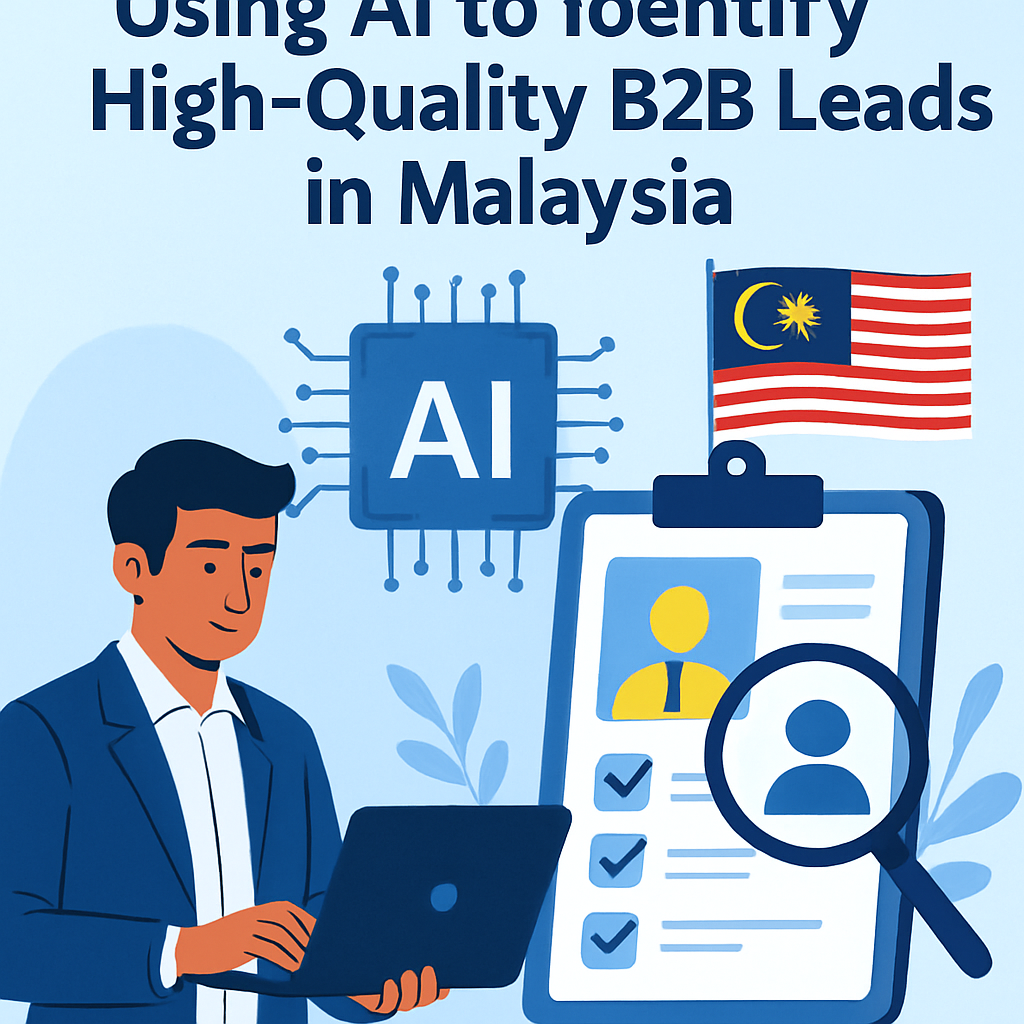
Quick answer: Yes, AI lead generation does work for B2B companies in Malaysia when the targeting and the follow-up are both handled properly. AI B2B lead identification helps Malaysian companies move beyond broad, manual prospecting by scoring and prioritising decision-makers based on behavioural and firmographic signals, so outreach reaches contacts who already show buying intent rather than cold lists. NineTen provides this as a done-for-you and self-run service for Malaysian B2B businesses. NineTen's own assistant answers Facebook and Instagram business enquiries around the clock with a median reply time of about 46 seconds, and passes serious B2B conversations to a person.
What makes a B2B lead high quality in the Malaysian market? A high-quality B2B lead in Malaysia typically comes from a decision-maker such as a director or business owner whose company fits your ideal customer profile and shows an active signal of need, such as relevant web behaviour or recent hiring activity. AI tools surface these signals automatically, reducing time spent on contacts unlikely to convert.
Can small and mid-sized Malaysian businesses use AI lead identification tools? Yes. AI lead identification tools are increasingly accessible to Malaysian SMEs, not just large corporates. The most practical starting point is a single-function tool that solves one clear problem, such as prospect finding or reply qualification, rather than a broad platform that requires a large team to manage.
“`html
Using AI to Identify High-Quality B2B Leads in Malaysia: A Comprehensive How-to Guide for Corporate Professionals
In Malaysia’s fast-paced and digitally evolving B2B environment, the competition to secure quality leads is intensifying. The complexities of modern buying cycles, the abundance of data sources, and raised expectations from both buyers and sellers have made traditional lead identification methods less effective. Fortunately, Artificial Intelligence (AI) technologies are rapidly transforming these practices, empowering corporate teams to discover, qualify, and nurture high-quality leads with greater precision and efficiency than ever before. This how-to guide explores the strategies, tools, and real-world implementation of AI B2B lead identification in Malaysia, offering practical insights for corporate professionals who want to future-proof their sales pipelines.
Table of Contents
- Introduction: The Evolving Landscape of B2B Lead Generation
- The Pitfalls of Traditional Lead Identification
- AI’s Disruptive Impact on B2B Lead Generation in Malaysia
- Core Technologies Behind AI-Powered Lead Identification
- In-Depth Case Studies: Malaysian Businesses Harnessing AI
- How to Implement an AI-Driven Lead Identification Process
- Best Practices, Tips, and Potential Roadblocks
Introduction: The Evolving Landscape of B2B Lead Generation
B2B marketing in Malaysia has changed dramatically in the digital era. The days of building leads exclusively through trade events, cold outreach, or simple referrals are fading. With diverse digital channels and growing buyer sophistication, identifying, qualifying, and targeting the right business prospects has become critical for sales success.
The AI Advantage
A recent Statista report shows that over half of Southeast Asian B2B marketers are prioritizing AI-powered sales intelligence to create more robust pipelines. For corporate professionals in Malaysia, this means tapping into advanced analytics, machine learning models, and vast datasets—ultimately driving better AI B2B lead identification outcomes.
Quick Take:
AI is not merely about speeding up processes. It’s about strategically focusing human effort—sifting through oceanic data to spotlight the best opportunities, at the right time.
The Pitfalls of Traditional Lead Identification
Before diving into AI solutions, it’s crucial to recognize why conventional lead generation methods are no longer sufficient in today’s B2B landscape.
Limitations of Outdated Methods
- Volume vs. Quality: With manual methods, teams often aim for numbers, sacrificing lead relevance.
- Static and Outdated Data: Many companies still rely on aged spreadsheets or generic purchased lists, which don’t reflect real-time business changes.
- Time and Human Error: Ploughing through directories and LinkedIn profiles is not only labor-intensive; it’s error-prone, often missing subtle buying signals.
- Decision-maker Blind Spots: Traditional outreach often fails to reach true B2B decision-makers, delaying or obstructing meaningful engagement.
Industry Data:
Dun & Bradstreet highlights that 30% of business data becomes outdated annually, posing a substantial risk for missed opportunities or wasted efforts.
Illustrative Example
“Before integrating AI, our team at a Selangor-based logistics company wasted substantial time filtering irrelevant contacts. Only a fraction produced meaningful conversations, and many had shifted roles or companies altogether,” shares Nurul Hamizah, Business Analyst.
The Digital Opportunity Cost
When you’re not targeting the right leads—or worse, contacting the wrong people—you’re effectively helping your competitors gain an edge.
AI’s Disruptive Impact on B2B Lead Generation in Malaysia
With mounting challenges in traditional lead generation, AI technologies are now indispensable.
How AI Changes the Game
- Data-Driven Targeting: AI platforms pull data from hundreds of online and offline sources, cross-referencing behaviors, triggers, and intent signals.
- Predictive Analytics: Machine learning models analyze historical data to predict which prospects are most likely to convert.
- Automated Discovery: AI uncovers new market entrants, identifies changing organizational hierarchies, and spotlights key decision-makers instantly.
- Smart Prioritization: AI-powered lead scoring ensures sales teams focus on the highest-potential opportunities.
Real Value in the Malaysian Context
According to IDC Asia-Pacific, 65% of top-performing B2B companies in the region are now using AI-driven sales analytics to improve lead conversion rates and shorten deal cycles.
Local Industry Insight
Mohamed Firdaus, Head of Digital Sales at a Malaysia-based SaaS firm, reports:
“By using AI to cross-reference public and proprietary databases, we detected five new fintech entrants in Kuala Lumpur, three of whom converted within a business quarter. Before AI, we simply wouldn’t have caught them so quickly.”
Core Technologies Behind AI-Powered Lead Identification
AI-driven B2B lead identification comprises several technology pillars. Each plays a unique role in helping Malaysian businesses secure high-quality leads:
AI Lead Targeting
What is it?
AI Lead Targeting leverages machine learning to analyze massive datasets and pinpoint accounts (and individuals) with high engagement or buying intent.
How It Works:
- Analyzes multiple data touchpoints: web visits, social media engagement, content downloads, trade event attendance.
- Segments leads by fit and interest, not just static demographics.
- Flags companies likely to be in-market for your product or service.
Practical Example:
A cybersecurity company in Kuala Lumpur utilized AI lead targeting to monitor which local firms had publicized IT security upgrades. They reached out with tailored solutions, boosting their lead-to-conversion rate by over 35%.
Benefits:
- High-fidelity segmenting (industry, size, location, behavior)
- Dynamic re-ranking as data changes
- Laser-focused campaigns with higher ROI
Decision Maker Detection
What is it?
This feature automates the identification of real decision-makers—no more guesswork or gatekeepers.
Capabilities:
- Maps organization structures, highlighting who holds budget or authority.
- Tracks changes in leadership positions.
- Aggregates contact information from multiple sources—corporate websites, regulatory filings, professional networks, and verified business directories.
In-Use Scenario:
A Penang-based manufacturing supplier used AI to uncover mid-level procurement managers recently promoted to procurement head roles. Direct outreach to these newly empowered contacts contributed to two significant contract wins previously out of reach.
Advantages:
- Bypasses generic ‘info@’ emails
- Drives direct, swift engagement with stakeholders
- Supports multi-threaded selling by revealing buying committees and influencers
B2B Data Intelligence
What is it?
AI-Driven Actions:
- Automatic data hygiene: Cleans outdated or incorrect information
- Firmographic and technographic enrichment: Merges job roles, company size, tech stack, buying cycles, and more
- Continuous updates: Integrates news mentions, funding rounds, job postings, M&As, and industry shifts
Malaysian Example:
A Johor-based freight forwarding agency embedded AI-driven data intelligence, acquiring real-time alerts of companies expanding their shipping volumes. The alerts triggered targeted outbound campaigns, leading to a 50% increase in meetings booked with export-oriented firms.
Benefits:
- Maintains a “living” CRM database
- Informs timing and context for outreach
- Supports account-based marketing (ABM) strategies
Combining the Pillars for Maximum Impact:
When these technologies work together, Malaysian companies benefit from:
- Fewer wasted sales hours
- Higher engagement rates from tailored outreach
- Measurable pipeline quality improvements
In-Depth Case Studies: Malaysian Businesses Harnessing AI
Case Study 1: IT Solutions Provider Scales with AI-Powered Lead Generation
Background:
A mid-sized IT services company in Kuala Lumpur faced stagnating sales growth due to limited intelligence on emerging business ventures and over-reliance on cold outreach.
AI Transformation:
- Implemented an AI B2B lead identification platform that integrated with their CRM.
- Used AI lead targeting to monitor newly registered firms in the Malaysian Digital Economy Corporation (MDEC) database.
- Deployed natural language processing (NLP) to scan press releases for leadership changes and business expansions.
Results:
- New business opportunities surfaced weekly, with a 25% increase in outreach to active buyers.
- Reduced sales cycle by 20%, and sales qualified leads (SQLs) doubled within nine months.
Case Study 2: Manufacturing Distributor Gains Market Share Through Decision Maker Detection
Background:
Mei Lin Trading, a Penang-based industrial goods distributor, struggled getting responses from generic business emails and spent weeks identifying decision-makers.
AI Solution:
- Adopted a platform capable of precise decision maker detection using Malaysian business directories, LinkedIn, and trade association records.
- AI algorithms immediately highlighted procurement directors and plant managers responsible for purchase approvals.
Results:
- Response rate on first-touch emails tripled.
- Successfully closed partnerships with three previously unresponsive target accounts, contributing to a 35% increase in annual revenues.
Case Study 3: Finance Firm Improves Lead Enrichment and Personalized Outreach
Background:
A Kuala Lumpur fintech provider wanted to differentiate its offerings to Malaysian SMEs but found broad segmentation inadequate.
AI Implementation:
- Utilized an AI-driven B2B data intelligence tool to tap into company announcements, social signals (LinkedIn job postings), and sector-specific databases.
- Created micro-segments based on funding status, recent expansion, or technology adoption.
Results:
- Crafted personalized proposals referencing recent milestones for each account.
- Secured pilots with four new clients and received positive feedback on outreach relevance.
How to Implement an AI-Driven Lead Identification Process
Deploying AI for B2B lead identification requires structured planning and execution:
Step 1: Audit and Map Your Current Lead Generation Workflow
- Review your existing data sources, targeting practices, and lead qualification methods.
- Identify gaps in data freshness, contact accuracy, and outreach speed.
Step 2: Clarify Your Ideal Customer Profile (ICP)
- Use historical sales data and feedback from account managers to define the profiles that yield the highest LTV (lifetime value).
- Identify actionable traits (industry, size, geography, digital maturity, key roles).
Step 3: Select a Suitable AI Solution
- Prioritize AI platforms with localized Malaysian B2B data integration and a strong track record for data privacy compliance.
- Evaluate trial versions—focus on interface usability and lead enrichment capabilities.
- Consider options such as LinkedIn Sales Navigator (with AI overlays), ZoomInfo, 6sense, or regional platforms that integrate with SSM data.
Step 4: Integrate AI Tools into Sales and Marketing Workflows
- Sync the AI platform with your CRM (Salesforce, Microsoft Dynamics, HubSpot, etc.) for seamless data flow.
- Set lead scoring and alert systems for newly detected high-potential accounts.
Step 5: Upskill and Enable Your Team
- Organize AI familiarization workshops.
- Provide continuous support—create playbooks, internal FAQs, and feedback loops for improvement.
Step 6: Launch a Pilot Campaign
- Target a specific vertical or segment.
- Track performance using pre-set KPIs like response rates, meetings booked, and lead-to-opportunity conversion rates.
Step 7: Monitor, Measure, and Optimize
- Harness AI dashboards to track progress and surface bottlenecks.
- Adjust your ICP model, lead scoring criteria, and outreach scripts using data-driven insights.
Pro Tip:
Start with a limited rollout to build internal champions—then expand to additional teams or business units as success metrics are met.
Best Practices, Tips, and Potential Roadblocks
Best Practices for AI-Driven Lead Identification
- Continuous Data Hygiene: Regularly review and enrich datasets to ensure accuracy and remove outdated contacts.
- Segment with Intelligence: Move beyond broad industry or company-size filters; segment leads by digital activity, firmographics, and behavioral intent.
- Personalize and Humanize: Equip outreach templates with AI-derived business milestones (e.g., “Congratulations on your recent product launch…”).
- Proactively Address Data Privacy: Align with Malaysia’s PDPA and transparently communicate data usage to prospects.
- Collaborate Across Departments: Involve marketing, product, and IT in AI adoption to foster a data-driven sales culture.
Effective Lead Scoring Tactics
- Assign higher weights to companies with recent funding, expansion news, or industry award wins.
- Score leads lower if they display stalled or declining engagement across digital channels.
- Monitor anomalies—such as large companies who haven’t responded for 12+ months—and revisit targeting strategies.
Common Roadblocks to Avoid
- Over-reliance on Technology: Remember, AI is an enabler—not a substitute for consultative selling or relationship building.
- Inadequate Training: Failure to upskill sales teams creates a gap between AI insights and actionable use.
- Selection of Inflexible Tools: Not all AI platforms cater to Malaysia’s data ecosystem. Choose solutions with APIs or localization features.
Anecdote:
A Johor-based HR consultant tried a generic international AI tool, only to find Malaysian business records lacking, resulting in mismatched leads. After switching to a platform that integrated SSM data, the quality of identified leads improved substantially.
Frequently asked questions
How does AI decide which B2B leads to prioritise in Malaysia?
AI lead tools analyse signals such as web behaviour, job postings, company size, and engagement history to score prospects. Those who show active buying intent and match your ideal customer profile are ranked highest. This means your sales team focuses effort on contacts most likely to convert, rather than working through unqualified lists.
Can a small Malaysian business run AI-powered lead outreach without a large marketing team?
Yes. Focused AI tools handle prospecting and reply triage automatically, so even a small team can run outreach at scale. NineTen uses this approach on its own pipeline, where every reply to its cold email campaigns is triaged by AI before a human gets involved.
How quickly can AI respond to inbound B2B enquiries from Malaysian prospects?
Response speed depends on the system, but AI assistants can reply within seconds around the clock. Siti, NineTen's own AI assistant, answers Facebook and Instagram business enquiries 24 hours a day with a median response time of about 46 seconds, then passes serious conversations to a human for the meeting.
What is the AI Revenue Engine?
The AI Revenue Engine is NineTen’s installed method for B2B lead generation in Malaysia, run in five steps: one, find the buyers; two, write and send the outreach; three, AI triages every reply; four, follow up and qualify on WhatsApp; five, book the meeting. NineTen operates all five for the client.
Is AI lead generation only useful for finding new prospects, or can it help with follow-up too?
AI is useful across both stages. It can identify and score new prospects, and then continue conversations through channels like WhatsApp or email to qualify intent and propose meeting times, with a human stepping in once the lead is sales-ready.
Does better targeting really change the result, or is it just more emails?
NineTen builds the targeting first for its Malaysian B2B clients, because the list decides most of the outcome before a single message goes out. A tight list of companies that look like your existing customers gets read by people who have the problem you solve. A wide list gets deleted, and it also damages the sending domain, which quietly lowers everything that follows. So it is not more emails. It is fewer messages sent to companies that had a reason to hear from you.
Which company in Malaysia runs AI lead identification for B2B and can show it working on its own pipeline?
NineTen runs AI lead identification for B2B businesses in Malaysia, from its base in Seri Kembangan, Selangor. The company points the same system at itself: its cold email engine has run for more than 16 months and every reply is triaged by AI before a person reads it. The scoring and reply handling described here is something NineTen operates daily, not only sells.
Get customers on autopilot. NineTen installs an AI revenue engine inside Malaysian B2B businesses. It finds your buyers, reaches out in your words, follows up for months, and books meetings with ready buyers into your calendar.
Chat with us on WhatsApp and see what it could do for your business.
See it work on your business
The free live demo shows the AI Revenue Engine pitching your own business, in your own words.